Project Overview
A premier continuing care retirement community (CCRC) spanning 40 acres in the Pacific Northwest — comprising 320 independent living apartments, 80 assisted living suites, and a 60-unit memory care neighborhood — required a comprehensive exterior and interior wayfinding program. The signage had to serve residents with varying visual and cognitive abilities, meet stringent ADA and state aging-services regulations, and maintain a warm, residential aesthetic (not institutional).
Scope
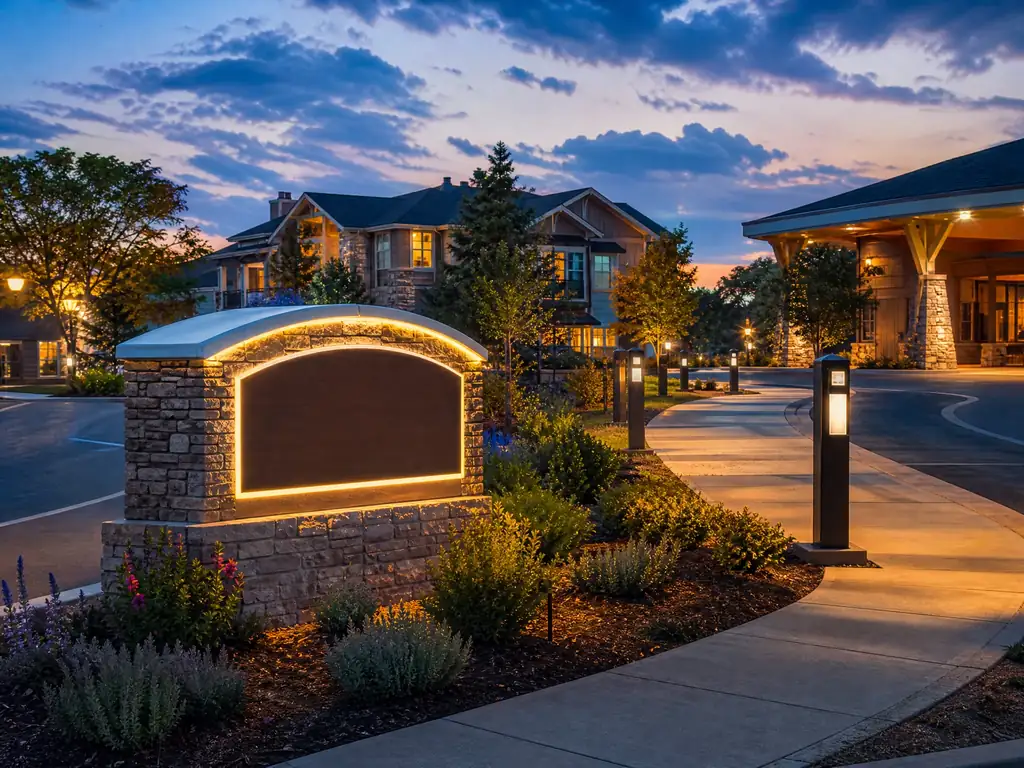
- Three illuminated monument signs at primary campus entries: 3m wide aluminum cabinets with push-through acrylic faces, warm-white LED (3000K) for reduced glare, internally illuminated address numerals
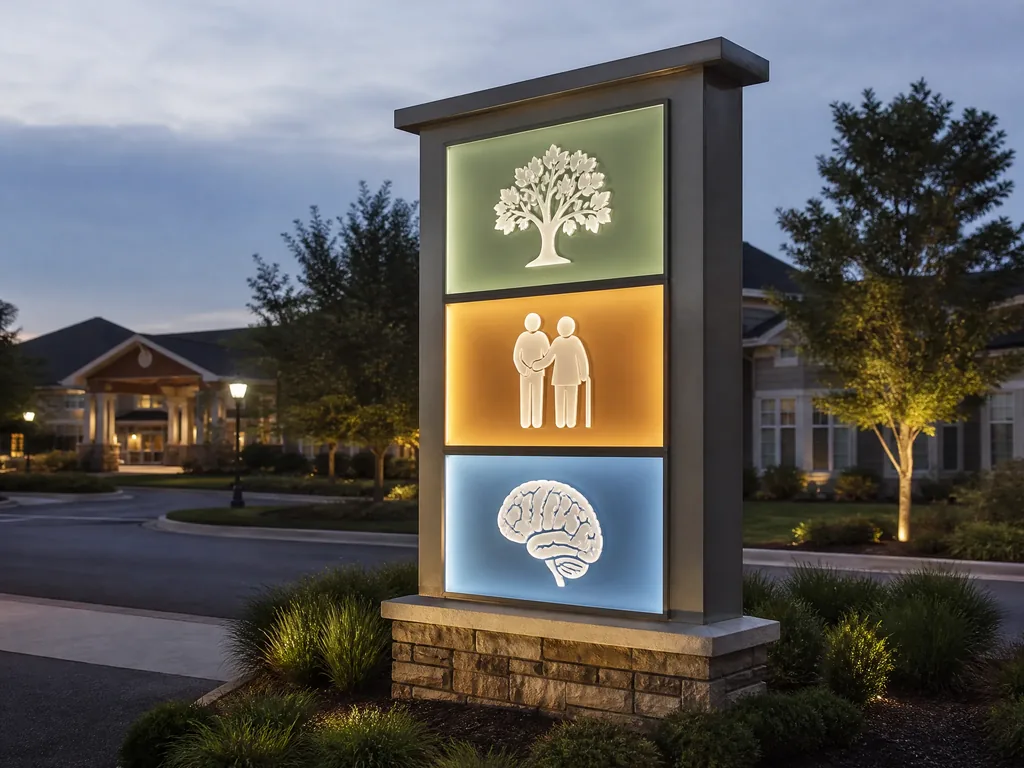
- Neighborhood identification: 6 color-coded illuminated pylons (independent living = sage green, assisted living = warm amber, memory care = soft blue) with large typography and landmark icons
- Vehicular wayfinding: 25 double-sided directional signs with high-contrast reflective graphics, oversized lettering (min 150mm cap height) for reduced visual acuity
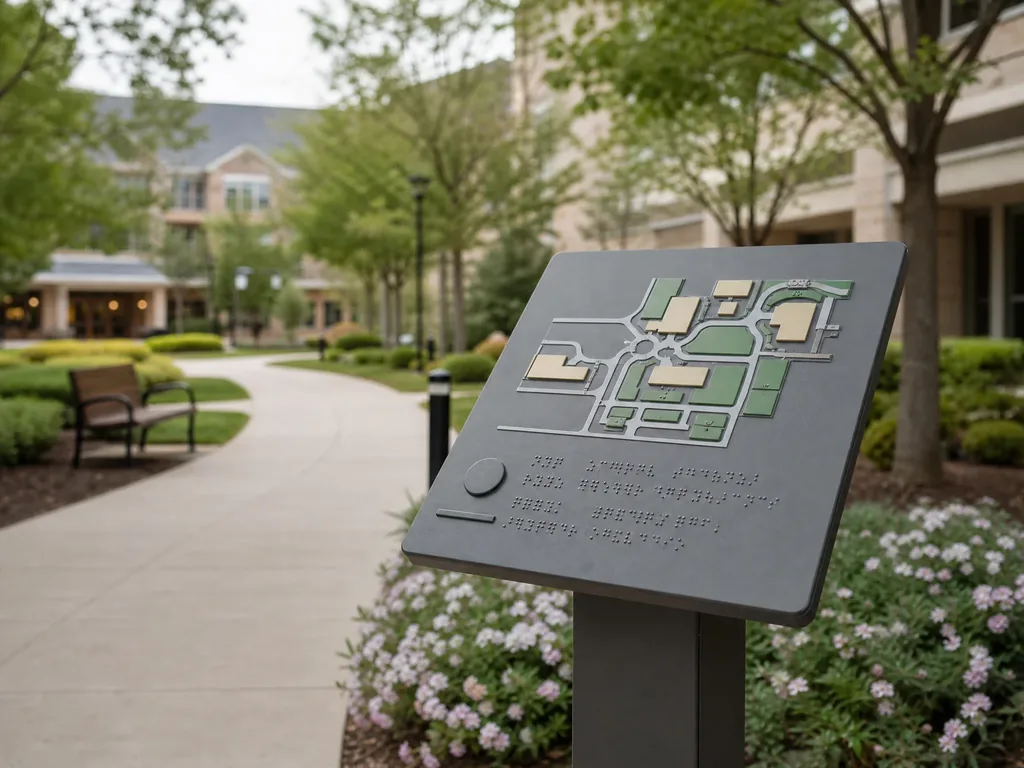
- Pedestrian wayfinding: 80 blade signs and finger posts with tactile maps at decision points, Grade 2 Braille, non-glare matte finishes
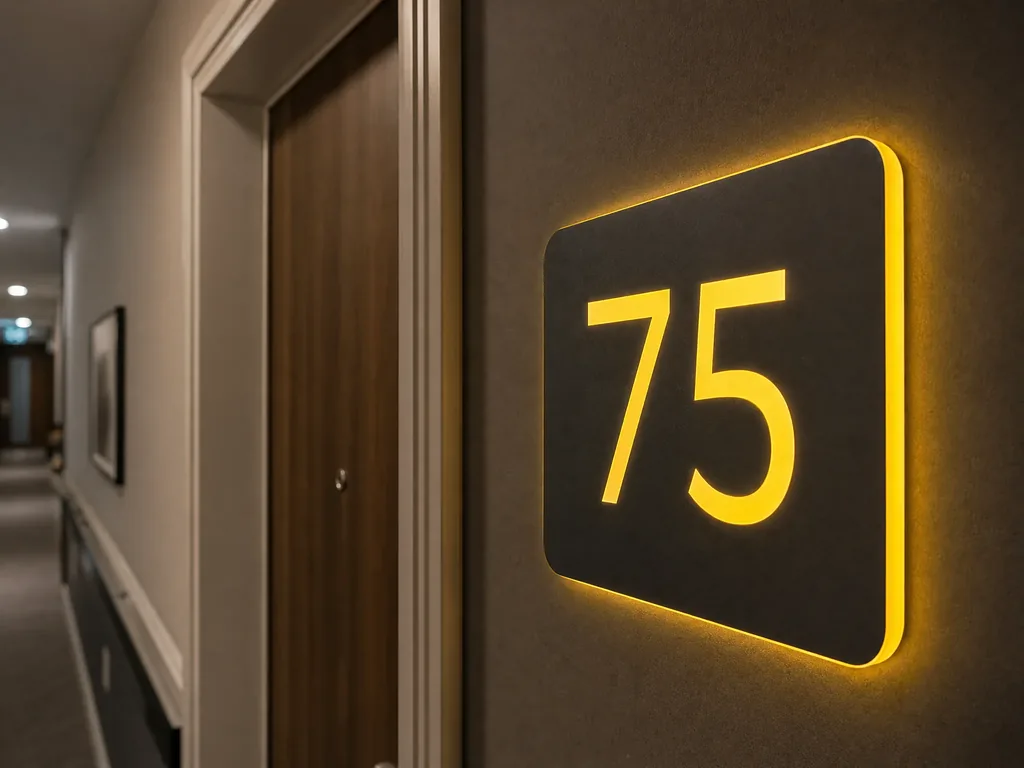
- Illuminated room number doorplates: 300+ backlit acrylic doorplates with large numerals (75mm), integrated LED edge-lighting, dementia-friendly contrast (yellow on charcoal)
- Memory care secured perimeter: illuminated wandering-prevention signage at egress points, disguised as decorative garden markers
- Emergency egress: photoluminescent/LED hybrid exit signs with 3-hour battery backup, integrated with nurse call system
Technical Specifications
- All exterior signs: IP66, UL 48, wind load per ASCE 7-16
- LED color temperature: 3000K (memory care 2700K) — reduced blue-light disruption for circadian health
- Contrast ratios: ≥7:1 per ADA 703.5, validated by third-party photometric testing
- Mounting: breakaway bases for vehicular areas, tamper-resistant for memory care zones
- Production: single specification across 3 neighborhoods — facilities team can reorder any component from original files
Result
Post-occupancy survey (6 months) showed 91% of residents rated wayfinding “easy” or “very easy” — up from 54% with the legacy system. Zero wayfinding-related incident reports in memory care neighborhood. State licensing survey cited signage program as “exemplary for dementia-friendly design.” Maintenance team reports 78% reduction in signage-related work orders. The unified specification enables the facilities director to manage inventory across three distinct neighborhoods from a single BOM.