What Are Push-Through LED Letters?
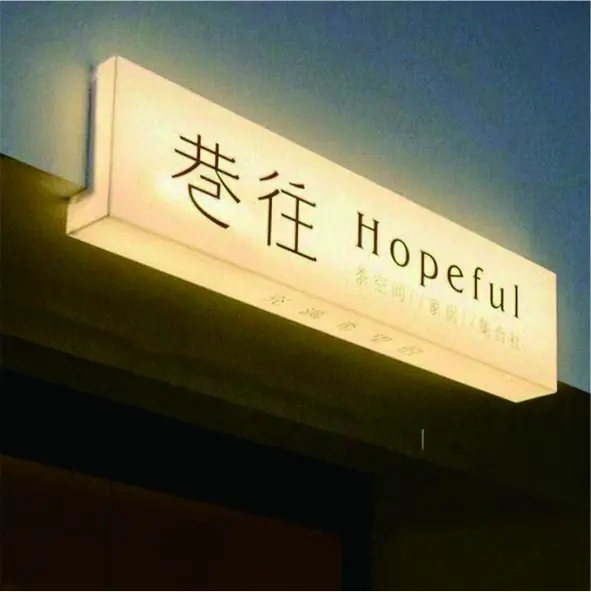
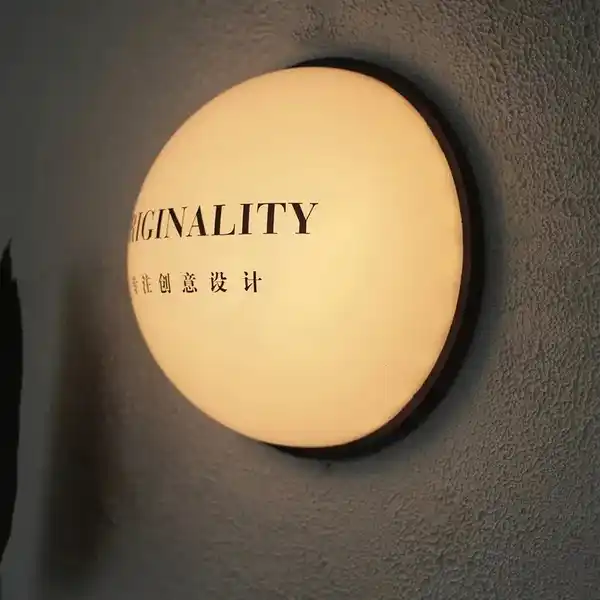
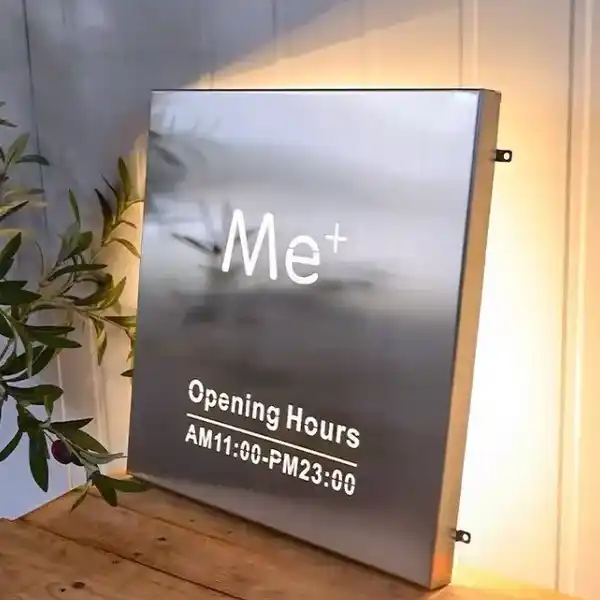
Push-through LED letters, known in Chinese as 透光立体字, are a premium form of 3D signage where individual acrylic letters or logos are cut and then pushed through a solid panel material such as brushed aluminum, stainless steel, tile, or acrylic. The letters sit flush with the panel face while their rear surfaces are backlit by LED modules, creating a clean halo effect that makes the characters glow from behind.
Unlike traditional channel letters that feature a visible front face and trim cap, push-through letters present a seamless, minimalist appearance. The light emanates from the gap between the letter edge and the panel cutout, producing what the industry calls a halo or reverse halo illumination that has become a hallmark of contemporary brand signage.
How Push-Through Letters Differ from Channel Letters
Channel letters are the most common LED sign type: they consist of individual enclosed boxes with a front face (usually acrylic), rear pan, and side trim. Push-through letters take a different approach. Instead of being self-contained boxes, each letter is a flat acrylic sheet that is inserted into a precisely laser-cut opening in a solid panel. This fundamental difference produces several distinct advantages:
- Seamless front face: No visible trim cap or channel walls on the illuminated side, resulting in an ultra-clean silhouette
- Monolithic panel design: The letters appear to emerge from a single solid surface rather than being mounted as separate units
- Uniform illumination: The LED halo provides even edge glow without the hot spots or dark zones common in smaller channel letters
- Reduced profile depth: The overall sign thickness is determined by the panel material rather than channel letter depth, often yielding a slimmer installation
For projects that demand a refined, architectural aesthetic, push-through letters offer a visual quality that standard channel letters cannot match. If you are exploring front-lit LED letters for comparison, push-through remains the superior choice when a monolithic panel look is the design goal.
Construction and Manufacturing Process
The manufacturing of push-through LED signs involves three primary components working in concert:
- Laser-cut solid panel: A sheet of metal (aluminum, stainless steel), acrylic, or other rigid material is precisely laser-cut to the exact outline of each letter or logo shape. Tolerances are typically within 0.5 mm to ensure a snug fit.
- Acrylic push-through faces: Each letter is fabricated from diffused acrylic sheet, typically 5 to 10 mm thick. The acrylic is cut to the letter profile and polished to optical clarity on the front face while retaining a matte or frosted rear surface to diffuse the LED light evenly.
- LED halo backlighting: High-density LED strips are mounted on the rear surface of the panel, positioned to cast light through the gap between the acrylic letter edge and the panel cutout. This creates the signature halo glow that defines the push-through aesthetic.
The letters are then secured from behind using retention clips or adhesive, and the entire assembly is mounted to a backing plate that houses the LED drivers and power supply. For exterior installations, the panel is typically fabricated from 3 mm brushed aluminum or 304 stainless steel to ensure weather resistance and structural rigidity.
Installation Types and Applications
Push-through LED letters are versatile enough for a range of installation contexts, each offering a distinct visual impact:
- Wall panel signs: The most common application, where a solid panel bearing the push-through letters is mounted directly onto an interior or exterior wall. Ideal for reception areas, storefronts, and corridor branding.
- Exterior facade signage: Large-format push-through signs mounted on building facades, often integrating the company logo alongside text. The halo effect is particularly striking at night against a building architectural lines.
- Reception lobby signs: Interior lobby installations where the sign serves as a focal point. The seamless letter-to-panel interface complements premium interior design schemes in hotels, corporate headquarters, and luxury retail spaces.
- Showroom and exhibition displays: Temporary or permanent installations for trade shows and showrooms where a striking, modern aesthetic is essential for brand presentation.
These signs are particularly well-suited for luxury retail brands, boutique hotels, corporate lobbies, and high-end showrooms where the visual language demands sophistication and restraint.
Cost Factors and Pricing Considerations
The cost of push-through LED signs is influenced by several factors. Panel material is the primary driver — brushed aluminum and stainless steel panels cost more than acrylic substrates. Letter size and complexity also affect pricing, as larger or more intricate shapes require larger laser-cut panels and more LED material. Additional considerations include:
- Panel material: Aluminum panels are the most common; stainless steel adds roughly 30 to 50 percent to panel cost but offers superior durability for exterior use
- Letter size: Signs with letters under 300 mm in height typically cost less per character than larger formats
- LED configuration: Single-color white LED is standard; programmable RGB or warm-white tunable options increase cost
- Quantity: As with all custom signage, bulk orders benefit from economies of scale in both panel fabrication and LED assembly
For reference, our 2026 LED sign cost guide provides detailed pricing benchmarks across sign types, including push-through letters. If you would like pricing for a specific project, get a free quote and our team will provide a detailed proposal within 24 hours.
Technical Specifications Overview
| Parameter | Typical Range |
|---|---|
| Panel thickness | 3 to 6 mm |
| Acrylic face thickness | 5 to 10 mm |
| Letter height | 150 mm to 1200 mm |
| LED types | Warm white (3000K), cool white (6000K), RGB |
| Input voltage | 100 to 240 V AC, 12 or 24 V DC |
| IP rating (exterior) | IP65 |
| Expected LED lifespan | 50,000+ hours |
| Mounting | Stand-off, flush, or raceway |
Frequently Asked Questions
Are push-through letters suitable for exterior use?
Yes. When fabricated with a stainless steel or aluminum panel and IP65-rated LED modules, push-through letters perform reliably in outdoor environments. The sealed acrylic-to-panel interface prevents water ingress, and UV-stabilized acrylic maintains clarity over time.
What maintenance do push-through signs require?
Maintenance is minimal. The LED modules have a lifespan of 50,000+ hours, and the solid panel construction eliminates the need for front-facing cleaning of individual letter faces. Occasional panel surface cleaning with a mild detergent is sufficient for most installations.
Can I combine push-through letters with other sign types?
Absolutely. Push-through letters are often combined with other signage elements. For example, a reception sign might integrate push-through letters for the company name alongside front-lit resin letter signs for secondary information. They also complement full-color LED letter signs when dynamic branding is desired.
How long does fabrication take?
Standard push-through LED signs typically require 2 to 4 weeks for fabrication, depending on panel material, letter size, and order quantity. Rush orders can be accommodated for urgent projects.
Do push-through letters work well for logos as well as text?
Yes — push-through construction is equally effective for logos, icons, and abstract shapes. The laser-cut panel can accommodate any 2D geometry, making it ideal for brand marks that require precise edge definition.
Conclusion
Push-through LED letters represent the intersection of precision manufacturing and contemporary design. Their seamless letter-to-panel integration, uniform halo illumination, and architectural adaptability make them the preferred choice for brands seeking a sophisticated, modern presence. Whether for an exterior facade or an interior reception wall, push-through signs deliver a visual impact that standard channel letters cannot replicate.
For project inquiries or custom quotations, contact our team today.