What Are Hot Spots in Backlit Channel Letters?
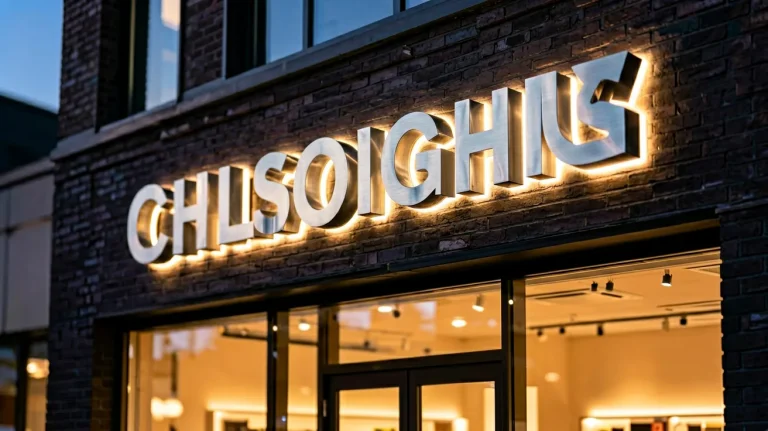
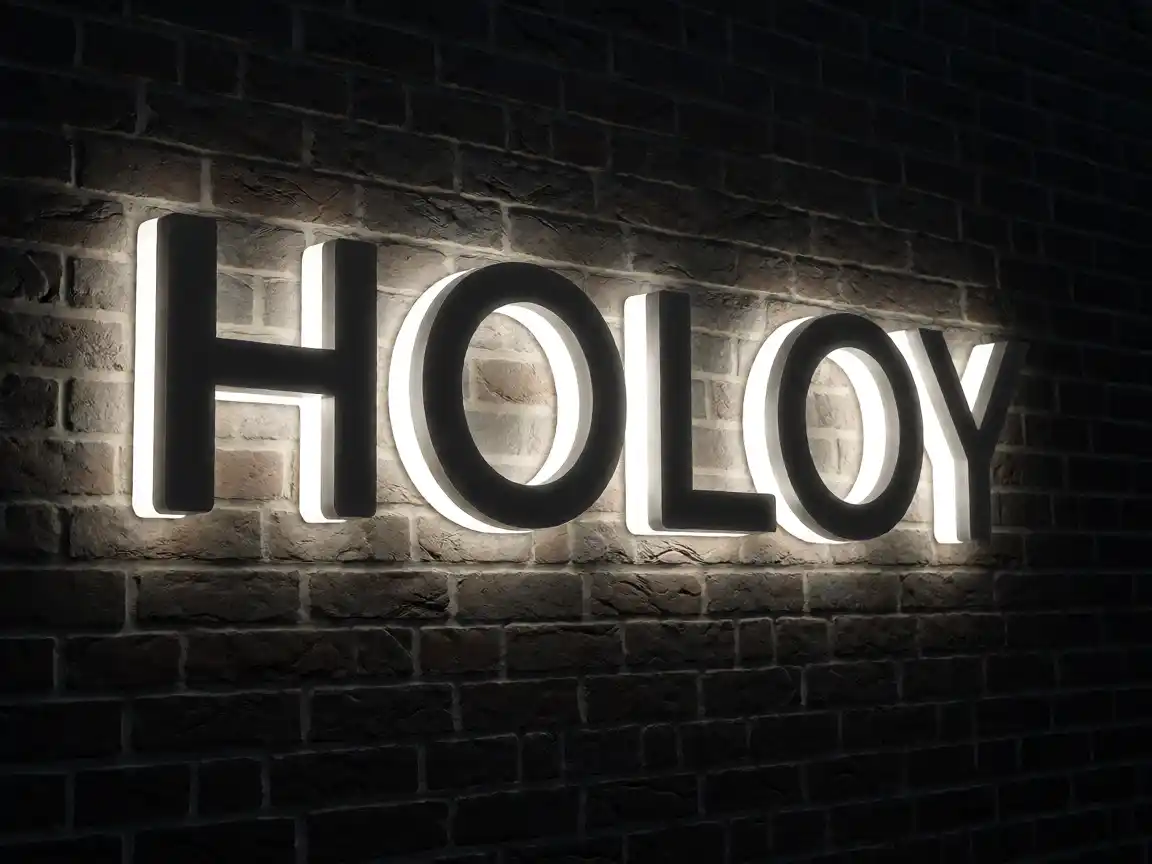
If you’ve ever seen a backlit channel letter sign where bright spots of light are visible through the face material — almost like little suns scattered across the letters — you’ve encountered a hot spot. It’s one of the most common quality issues in halo-lit signage, and it can ruin an otherwise premium-looking sign.
Hot spots occur when the LEDs behind the acrylic face are too concentrated, too close together, or lack proper diffusion. Instead of creating that smooth, even halo glow that makes reverse-illuminated letters look so sophisticated, you get a bumpy, inconsistent light pattern that looks unprofessional.
The good news? Hot spots are almost entirely preventable when you understand what causes them and how to specify your order correctly. In this guide, we’ll cover everything you need to know about avoiding hot spots in backlit channel letters — from LED spacing and diffuser selection to face material choices and depth requirements.
Why Do Hot Spots Form in Backlit Letters?
Understanding the root cause is the first step to prevention. Hot spots happen because of how light travels through acrylic and interacts with mounting hardware:
- LED spacing too wide: When LED modules are spaced more than 3-4 inches apart inside the letter channel, the gaps between them become visible as brighter zones where light concentrates, while darker zones appear between the LEDs.
- Insufficient letter depth: Shallow channel letters (less than 8-10 inches deep) don’t give light enough distance to scatter and blend before hitting the face material, creating visible LED points.
- Poor diffuser quality: The diffuser panel inside the letter scrambles and spreads light from each LED. Thin or low-quality diffusers don’t scatter light effectively, allowing individual LED points to show through.
- Wrong acrylic thickness: Thin acrylic faces (below 1/8 inch) transmit light too directly without enough internal scattering. Thicker acrylic or opal-faced options diffuse light better.
- LED color temperature: Cooler color temperatures (5000K-6500K) tend to make hot spots more visible than warmer tones (3000K-4000K), because the human eye perceives blue-white light as more intense at point sources.
The combination of these factors determines whether your backlit letters will deliver that coveted even-glow effect or look patchy and uneven.
The Critical Role of LED Spacing
LED spacing is the single most important factor in preventing hot spots. Here’s what you need to know:
Industry-Standard Spacing
Professional manufacturers typically space LEDs at 3 to 4 inches apart for halo-lit channel letters. This spacing ensures sufficient overlap of light beams so no individual LED point is visible through the face.
| Letter Height | Recommended LED Spacing | Minimum Spacing |
|---|---|---|
| 6-8 inches | 3 inches | 4 inches |
| 9-12 inches | 3-4 inches | 5 inches |
| 13-18 inches | 4 inches | 5-6 inches |
| 19+ inches | 4-5 inches | 6-7 inches |
What Happens With Oversized Spacing
Some manufacturers cut costs by using wider LED spacing — sometimes 6-8 inches apart. This reduces component costs but creates obvious hot spots, especially in letters smaller than 12 inches tall. If you’re comparing quotes from different suppliers and one seems significantly cheaper, ask about their LED spacing. It could explain the price difference.
LED Density Matters Too
Beyond spacing, the density of LEDs along each strip matters. Higher-density LED strips (more LEDs per meter) naturally produce more even illumination than lower-density options, even at the same center-to-center spacing. Always specify high-density LED strips for backlit applications.
Choosing the Right Diffuser Panel
The diffuser is your second line of defense against hot spots. It sits between the LEDs and the acrylic face, scattering light from each individual LED into a broader, softer beam.
Diffuser Types Compared
| Type | Light Scattering | Best For | Cost Impact |
|---|---|---|---|
| Frosted acrylic (1/8″) | Moderate | Standard halo-lit letters | Low |
| Opal acrylic (1/4″) | High | Premium glow, deep letter depth | Medium |
| Satin-finish polycarbonate | Very High | Problematic installations, tight budgets | Medium-High |
| Textured glass diffuser | Exceptional | Ultra-premium custom signs | High |
Thickness Guidelines
For standard backlit channel letters, at least 1/8-inch frosted or opal diffuser is the minimum specification. Thinner diffusers (1/16 inch) won’t scatter light adequately and will show hot spots, especially with wider LED spacing.
For letters under 10 inches tall or where the viewing distance is less than 20 feet, consider upgrading to a 1/4-inch opal diffuser. The extra material cost is minimal compared to the quality improvement.
Letter Depth and Halo Effect Quality
The depth of your channel letter — the distance between the face and the back panel — directly affects how well light can scatter before reaching the viewer’s eye.
Minimum Depth Requirements
To avoid hot spots and achieve a clean halo effect:
- 6-8 inch letters: Minimum 4-5 inch depth
- 9-12 inch letters: Minimum 6-8 inch depth
- 13-18 inch letters: Minimum 8-10 inch depth
- 19+ inch letters: Minimum 10-12 inch depth
Deeper letters give LEDs more room to spread their light, creating a softer, more uniform glow. Shallow letters compress the light path, making hot spots more likely even with good LED spacing and diffusers.
The Standoff Mounting Advantage
When backlit letters are standoff-mounted (spaced away from the wall by 2-4 inches), the gap between the letter and wall becomes part of the light path. This extra distance helps the halo glow spread more evenly across the wall surface, reducing the appearance of concentrated light sources behind the letters.
Flush-mounted letters (pressed against the wall) rely entirely on the letter depth for diffusion, making proper letter construction even more critical.
Acrylic Face Selection for Hot Spot Prevention
Your choice of face material and finish significantly impacts hot spot visibility:
Opacity Levels
For halo-lit applications, you want a face that transmits light well but still provides some internal scattering:
- Clear acrylic: Best for front-lit letters; shows hot spots easily in backlit applications
- Frosted/Translucent acrylic: Good middle ground; scatters light while maintaining brightness
- Opal/White acrylic: Excellent diffusion but reduces overall brightness by 20-30%
- Smoke/Black acrylic: Creates dramatic contrast; hot spots less visible but overall effect is subtler
Thickness Matters
Use at least 1/4-inch acrylic for the face on backlit letters. Thinner 1/8-inch faces flex more easily and transmit light more directly, making hot spots more apparent. The extra thickness also improves durability during shipping and installation.
Surface Finish
A glossy exterior finish with a matte interior is often ideal for halo-lit letters. The matte interior surface helps scatter light outward, while the glossy exterior maintains a clean, premium appearance from the viewer’s perspective.
Color Temperature and Hot Spot Perception
Interestingly, the color temperature of your LEDs affects how noticeable hot spots appear:
- Warm white (3000K): Soft yellow tones make hot spots less jarring; they blend more naturally into the overall glow
- Natural white (4000K): Good balance; hot spots are moderate but acceptable
- Cool white (5000K-6500K): Bright blue-white light makes hot spots very visible; the higher intensity of individual LEDs amplifies the problem
If you’re concerned about hot spots, warm white or natural white LEDs are your safest choice for halo-lit channel letters. Reserve cool white for applications where maximum brightness is prioritized over perfect uniformity.
Quality Checklist: How to Specify Hot-Spot-Free Backlit Letters
When ordering custom backlit channel letters, use this checklist to ensure your manufacturer specifies the right components:
- LED spacing: 3-4 inches maximum (center to center)
- LED strips: High density (minimum 60 LEDs per meter)
- Diffuser panel: 1/8″ minimum, 1/4″ preferred
- Letter depth: Matches height-to-depth ratio standards above
- Face material: 1/4″ acrylic with appropriate opacity
- Color temperature: 3000K-4000K recommended for halo effect
- Driver quality: Constant current drivers for consistent brightness
If any of these specifications are missing from your quote, ask about them. A manufacturer who skips on LED spacing or diffuser quality is cutting corners that will be visible once the sign is installed.
Can You Fix Hot Spots After Installation?
If you already have backlit letters with hot spots, there are limited remediation options:
- Add external diffuser film: Adhesive opal film applied to the interior face can help scatter light, though it reduces brightness
- Replace LEDs with higher-density strips: This requires disassembling the letters and is labor-intensive
- Install additional diffuser panels: Adding a second diffuser layer inside the letter can help, but may reduce output significantly
These fixes are temporary and costly compared to getting it right the first time. Prevention through proper specification is always more economical than remediation.
Why Choose Y SIGNS LED for Backlit Channel Letters?
At Y SIGNS LED, we understand that hot spot prevention is built into every backlit letter we produce. Our standard specifications exceed industry minimums:
- All backlit channel letters use 3-inch maximum LED spacing with high-density strips
- Every letter includes a 1/4-inch opal diffuser panel as standard
- Letter depth is calculated based on height-to-depth ratios that guarantee even illumination
- We offer warm white, natural white, and cool white LED options with expert guidance on selection
- Custom halo-lit letter signs are manufactured in our Huizhou facility with rigorous quality testing before shipping
Whether you need halo-lit channel letter signs for a corporate headquarters, a luxury retail storefront, or a hospitality venue, we ensure every letter delivers that smooth, professional glow your brand deserves.
Ready to Order Hot-Spot-Free Backlit Letters?
Don’t risk a disappointing sign installation. Contact our team today for a free consultation and quote on your custom backlit channel letters project.