How LED Channel Letters Get Power
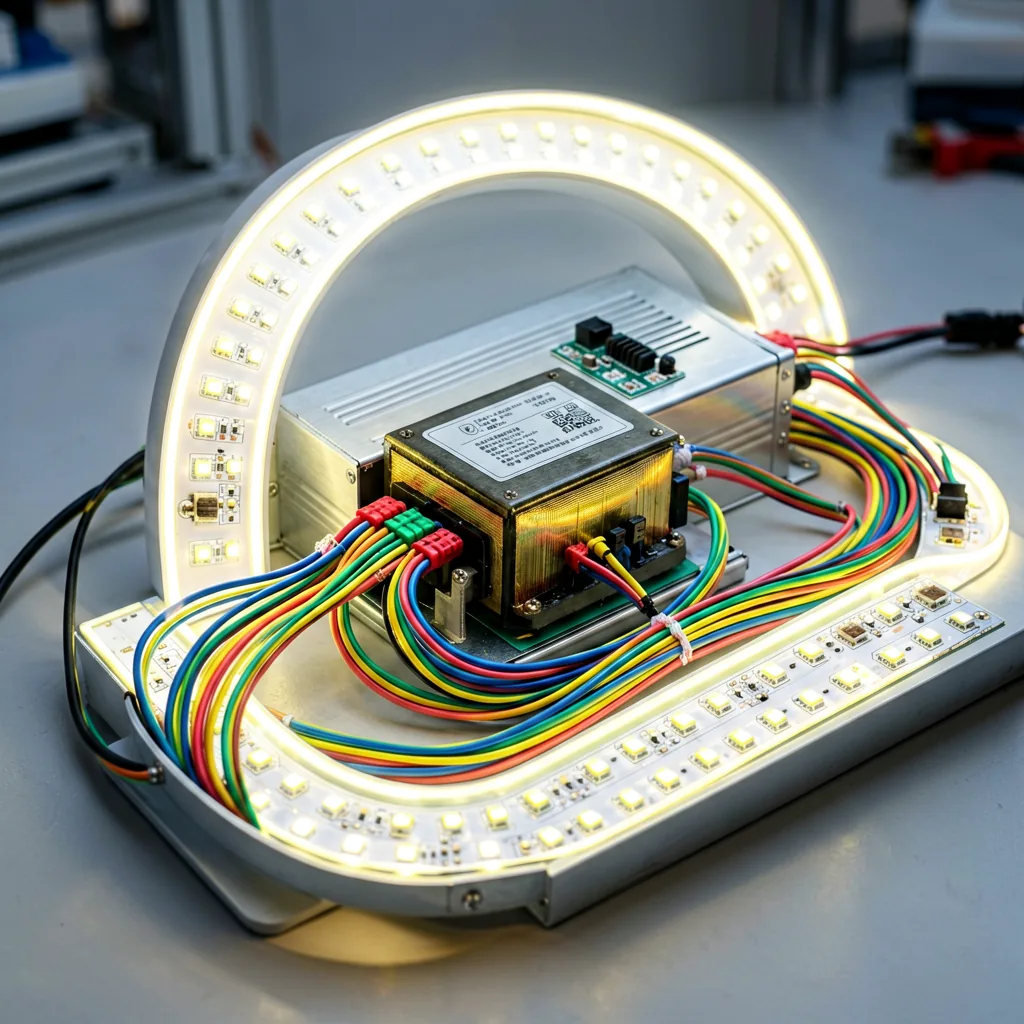
Every illuminated channel letter sign runs on a simple but critical electrical chain: mains AC power (110V in North America, 220V in most other regions) enters the building, passes through a channel letter power supply or LED driver, and exits as safe low-voltage DC (typically 12V or 24V) to the LED modules inside each letter. This voltage conversion is what makes modern LED signage both energy-efficient and safe for continuous outdoor operation.
Why low voltage? LEDs are semiconductor devices that require direct current at low voltage to operate efficiently and last for tens of thousands of hours. Running them at 12V or 24V DC rather than raw mains voltage reduces fire risk, eliminates harsh shock hazards, and allows thinner wiring to be routed discreetly behind facades and through channel cavities. For commercial installers, this means faster wiring runs, simpler compliance with electrical codes, and fewer service calls down the road.
The heart of every LED channel letter system is the LED driver — often called a channel letter transformer in trade parlance. This compact metal or plastic enclosure plugs into standard electrical circuits and steps voltage down to the exact level your LED modules require. Modern drivers are 85–95% efficient, meaning very little energy is wasted as heat compared to older neon or halogen systems.
Choosing the Right LED Driver for Your Sign
Selecting the correct LED driver involves matching voltage, wattage capacity, and enclosure rating to your sign’s specific requirements. The two most common output voltages are 12V and 24V DC, and the choice affects everything from wire gauge to maximum run length.
| Specification | 12V LED Modules | 24V LED Modules |
|---|---|---|
| Brightness (lumens per watt) | Similar output, slightly lower at distance | Same efficiency, better voltage retention over long runs |
| Maximum wiring run length | Up to 10–15 feet before voltage drop | Up to 20–30 feet with minimal drop |
| Conductor size | Thicker wire (16–18 AWG) needed | Thinner wire (18–20 AWG) sufficient |
| Energy consumption | Slightly higher current = more heat in wires | Lower current = marginally better efficiency |
| Best for | Small signs, short runs, indoor use | Large storefront signs, long runs, outdoor installations |
| Typical cost | Marginally lower per module | Marginally higher per module, fewer drivers needed |
To calculate total wattage, multiply the number of LED modules by their individual wattage, then add 20–25% headroom to prevent driver overload during peak operation. For example, a sign with 40 modules drawing 1.2W each = 48W load; a 60W or 75W driver provides adequate capacity without running hot.
Enclosure type matters just as much as voltage. Enclosed (dry-location) drivers suit indoor signs or protected outdoor housings, while IP67-rated waterproof drivers are essential for exposed installations where rain, snow, or pressure washing is a factor. IP67 drivers are sealed against dust and temporary submersion — a worthwhile investment for any signage mounted above ground level.
For backlit storefront channel letters, most installers specify 24V IP67 drivers to handle long runs across wide facades while resisting moisture and temperature extremes.
Estimating Power Needs for Your Channel Letter Sign
Accurate power estimation prevents under-speccing (which causes flickering and shortened LED life) and over-speccing (which wastes money and adds unnecessary heat). A standard channel letter consumes roughly 0.5 to 1.5 watts per square foot of letter face, depending on character height, LED density, and desired brightness.
| Sign Size Category | Typical Letter Height | Est. Wattage Range | Driver Capacity |
|---|---|---|---|
| Small — mailbox or wall-mounted | 6–12 inches | 10–30W | 30–50W driver |
| Medium — standard storefront | 12–24 inches | 50–150W | 75–150W driver |
| Large — building facade or monument | 24–48+ inches | 150–400W | 200–400W driver (or multiple) |
A typical single-line storefront sign with 18-inch letters spans 8–12 feet and draws between 80 and 200 watts — well within the capacity of a single 150W or 200W driver. Larger multi-line signs may require two or more drivers wired in parallel, each serving a separate zone of letters for balanced load distribution.
When planning, also factor in energy-efficient illuminated signage principles: choosing high-efficacy LED modules (100+ lumens per watt), specifying dimmable drivers, and incorporating photocell or timer controls can cut operational costs by 30–50% compared to basic on/off systems.
Wiring and Connections for LED Channel Letters
Proper wiring ensures uniform brightness across all letters and protects your investment from premature failure. LED channel letter systems typically wire modules in parallel configuration — each strip or module receives the full driver voltage independently — though some manufacturers offer series-wired arrays for simplified installations on uniform letter rows.
Key wiring best practices include using 18–20 AWG silicone-coated wire for flexibility and heat resistance, keeping conductor runs as short as possible to minimize voltage drop, and terminating all connections with waterproof connectors or heat-shrink tubing rated for outdoor use. Daisy-chaining multiple driver outputs is acceptable when the total load stays within each driver’s rated capacity.
Concealed wiring is a hallmark of professional installations: route power cables through the channel cavity, behind the face panels, or within mounting brackets rather than running exposed conductors along building surfaces. This not only improves aesthetics but reduces the risk of wire damage from landscaping, cleaning equipment, or thermal expansion.
Smart Controls and Dimming Options
Modern LED channel letter systems support a range of control options that go beyond simple on/off switching. Photocells and daylight sensors automatically illuminate signs at dusk and extinguish them at dawn — the most cost-effective upgrade for any commercial installation. Electronic timers allow precise scheduling, useful for businesses with fixed operating hours.
For premium applications, Wi-Fi and app-based dimming systems let facility managers adjust brightness remotely, set custom schedules from anywhere, and receive fault alerts if a driver or module fails. Restaurants, hotels, and corporate campuses increasingly specify these features to reduce light pollution, comply with municipal after-hours lighting ordinances, and lower energy bills.
Dimming LED channel letters typically saves 30–50% on electricity costs during overnight hours when full brightness isn’t necessary. A 200W sign dimmed to 40% output after midnight still provides visible branding while drawing only 80W — a meaningful reduction over hundreds of operating hours per month.
Safety and Compliance Considerations
Electrical safety isn’t optional for commercial signage. All LED drivers and power supplies should carry recognized certification marks — UL (Underwriters Laboratories) for North America, CE (Conformité Européenne) for Europe, and RoHS (Restriction of Hazardous Substances) compliance worldwide. These certifications verify that the driver meets rigorous standards for insulation, temperature rise, surge immunity, and material safety.
Surge protection is essential in regions prone to electrical storms or unstable grid conditions. Look for drivers with built-in transient voltage suppression (TVS) rated to handle at least 6,000V surges, or specify an external surge protector wired between the mains supply and the driver input.
Outdoor installations require weatherproof terminations at every connection point. Silicone gel-filled connectors, heat-shrink boot seals, and IP68-rated junction boxes prevent moisture ingress — the leading cause of premature LED driver failure in exterior signage. Always earth (ground) the driver metal enclosure to the building’s grounding system per local electrical code.
What to Tell Your Manufacturer When Ordering
When requesting a quote for full-color LED letter signs or custom channel letter projects, providing accurate power requirements upfront prevents costly field modifications. Share the following specifications with your manufacturer:
- Sign dimensions and letter height — determines total LED module count and wattage
- Indoor or outdoor installation — determines IP rating requirement for the driver
- Local mains voltage and frequency — 110–120V/60Hz (North America) or 220–240V/50Hz (rest of world)
- Control preferences — photocell, timer, or smart dimming system
- Any dimming or scheduling requirements — after-hours reduction, special event profiles
- Certification needs — UL, CE, RoHS, or other regional compliance marks
Y SIGNS LED provides complete power load calculations with every channel letter order, including recommended driver wattage, voltage specification, and wiring diagrams tailored to your sign layout. Contact our team to discuss your project requirements and receive a detailed quote — reach out to us today.