
The brief
A pharmacy in Germany needed a street facade that stayed legible after dark. Two things had to work together: a double-sided illuminated cross projecting from the corner, so it can be read from both directions along the pavement, and the pharmacy name set flat above the entrance in side-lit letters. The old frontage was a flat, unlit board — invisible at night and visually lost against the building’s pale render.
Because the elevation faces a public street with homes opposite, the owner also needed a sign built for permanent outdoor use: sealed housings, weather-resistant construction and LED illumination rather than mains-voltage glass neon. That constraint shaped everything downstream, from how the cross is wired to how the letters are fixed.
What we built
We produced the facade as one coordinated system — a projecting double-sided cross light box and a set of side-lit letters, both finished in the same dark housing so nothing on the elevation competes for attention.
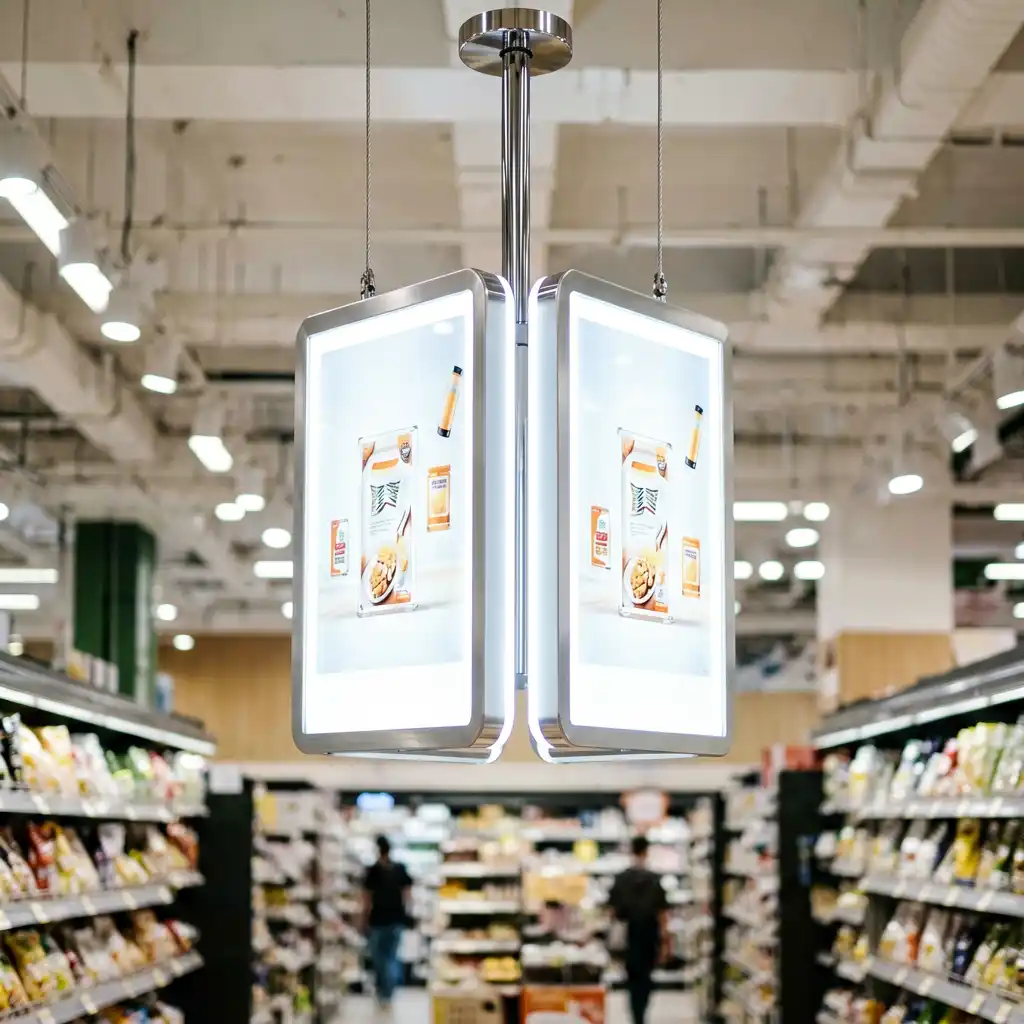
The cross is a sealed light box on a wall-mount projecting arm, lit from inside so the graphic reads identically on both faces. That is the point of the double-sided build: a customer walking towards the shop and a driver approaching from the opposite direction both see the same bright cross, instead of one lit face and one dull back panel.
- Cross light box: steel and acrylic construction with a wall-mount projecting arm, internally lit on both faces
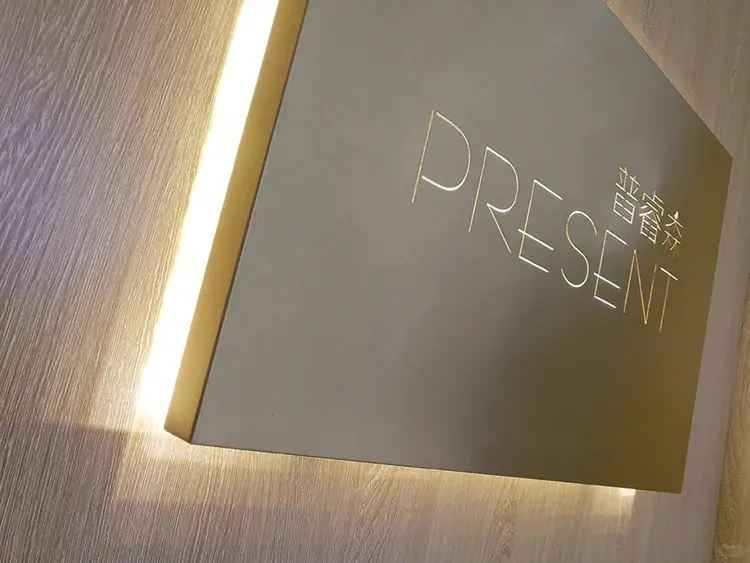
- Facade letters: aluminium and acrylic 3D letters with all-around side illumination, moulded to the client’s own letterforms
- Illumination: internal LED array behind a diffusion layer, giving even brightness across the cross faces and behind the letter returns
- Outdoor build: weather-sealed edges and outdoor-rated construction, specified for permanent exterior mounting
- Finish: matched housing colour across the cross and the letters, with unlit white letter faces so the name stays crisp in daylight
The cross comes from our standard projecting light box family and the dual-face build follows our double-sided light box construction, while the letterwork is drawn from our 3D outdoor letter range. A replacement cross face or a matching second cross can therefore be re-ordered against the same production files.
How the project ran
The pharmacy supplied three things: the dimensions of the cross, a photograph of the elevation and the vector artwork for the name. From that we returned a scaled elevation drawing showing where the projecting arm would sit, how the letters would space across the fascia, and where the LED driver would be fed from inside the building.
Because the cross projects into the street, we produced a sample face first, so the owner could check colour and brightness against the render before the housings went into production. Letter spacing was set from the drawing rather than from the shopfront itself, which matters on older buildings where the fascia is rarely level.
Nothing in the build depends on a bespoke process. The cross and the letters are both standard outdoor light box and 3D letter constructions, adapted to the client’s dimensions, artwork and colour.
Delivery and installation
The cross, the letters and the projecting arm shipped crated with a 1:1 mounting template, a wiring diagram and installation notes, plus the fixing hardware for the arm and the letter rails. The pharmacy’s own contractor fixed the arm and rails to the facade, ran the feed through to the indoor driver point and connected the sign to the building supply.
The projecting arm carries the cross clear of the facade so it can be read from either approach along the street. The letters sit close to the wall above the entrance, lit by their own all-around illumination so they read as clearly as the cross without another light source on the frontage.
Outcome
The pharmacy now has a corner that reads from a distance after dark: a double-sided cross that catches the eye from both directions and facade letters that stay clean and legible above the door. The owner holds one production file for the whole elevation, so a replacement cross face or a spare letter can be matched exactly in a later batch. Nothing on the frontage needs glass neon or a servicing visit to stay lit, which keeps the running side of the sign as simple as the installation was.