The brief
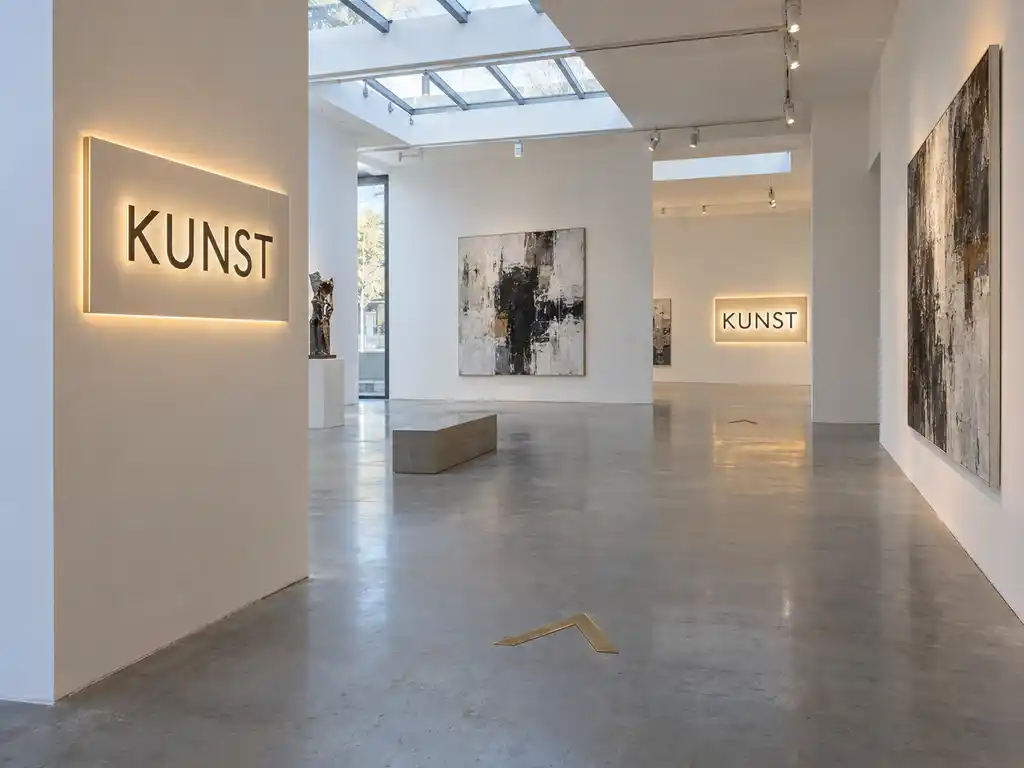
A contemporary art gallery in a European city needed a wayfinding and exhibition signage system that would guide visitors through a complex floor plan without competing with the artwork. The gallery’s curator was explicit: the signage had to be “invisible until needed” — present enough to provide guidance, but never the focus of a visitor’s attention. The gallery also needed exhibition title panels that would function as part of the viewing experience rather than as distractions. The gallery’s interior is minimalist: white walls, polished concrete floor, natural daylight from skylights.
What we built
We designed a three-tier signage system calibrated to the gallery’s interior architecture:
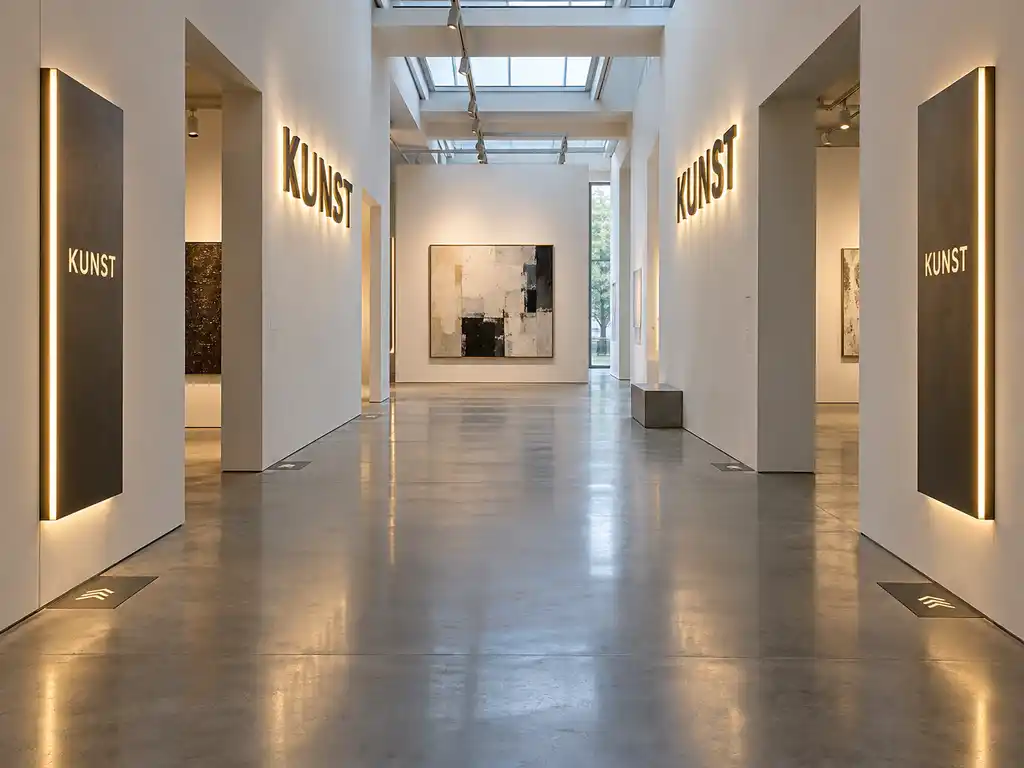
- Edge-lit wall panels (wayfinding, corridor level) — aluminium composite panels mounted on gallery walls, with warm LED strips running along the edges. The edge-lit effect produces a soft, even glow that provides wayfinding guidance without the visual weight of a fully illuminated sign. The panels are sized to read as architectural features rather than commercial signage. Aluminium returns and trim cap frame the panel faces. Hidden power supply is connected via concealed wiring in wall cavities.
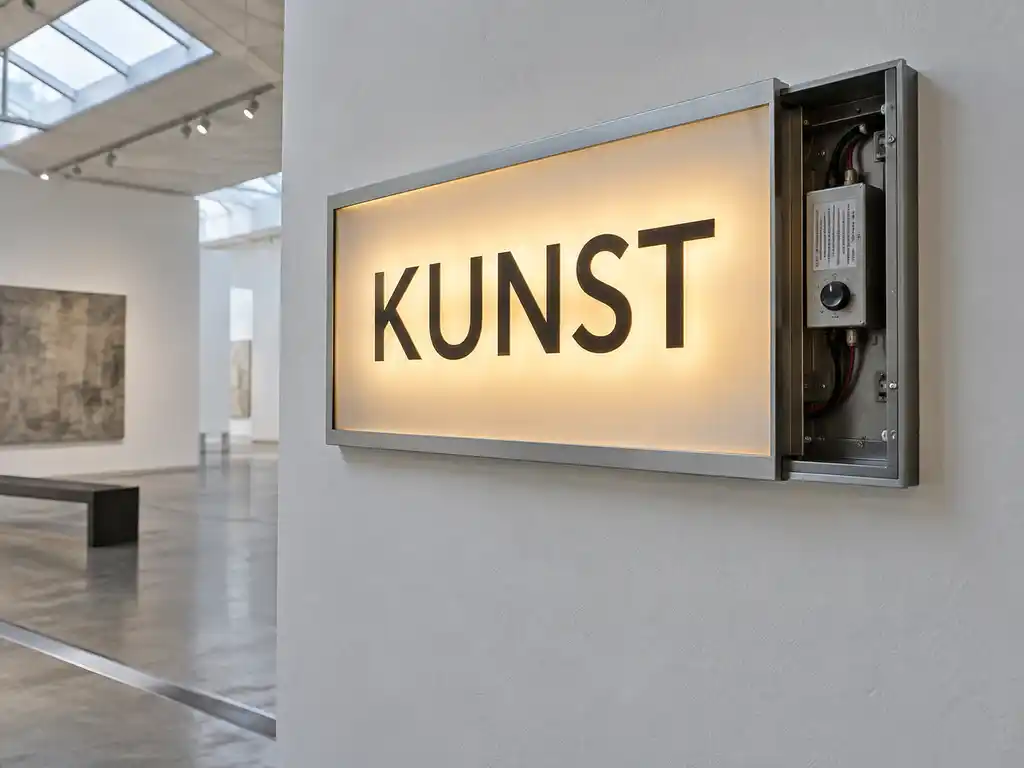
- Backlit acrylic exhibition title panels (gallery room level) — backlit acrylic panels with warm LED modules behind a diffuser face, mounted on gallery walls above each exhibition entrance. The backlit effect produces soft, even illumination that is legible from across the gallery room. A dimmable LED driver allows the gallery’s lighting technician to adjust the panel brightness to complement the exhibition’s lighting scheme. Aluminium frame with trim cap. Hidden power supply via wall cavity routing.
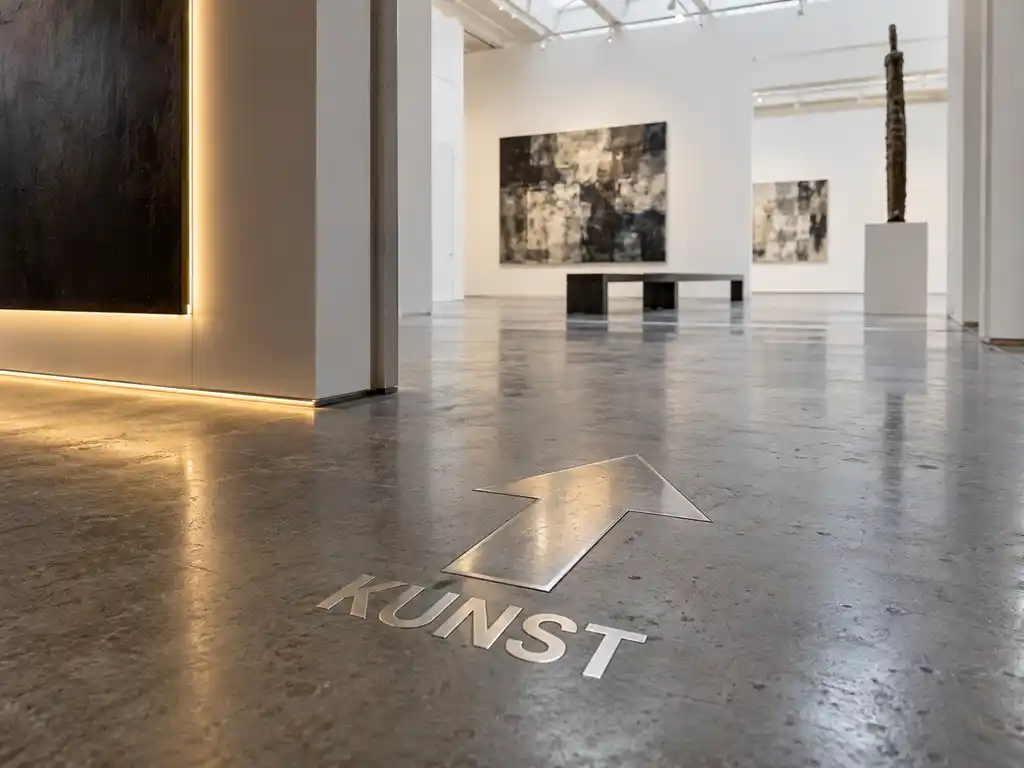
- Floor-level wayfinding markers (floor level) — non-illuminated reflective markers embedded in the polished concrete floor, with a directional arrow cast into the surface. The reflective finish catches natural daylight and artificial gallery lighting, providing guidance without active illumination. A subtle LED accent strip along the edge of each marker provides a minimal visual anchor. The markers are sized to be visible from standing height without requiring a visitor to look at the floor.
All components share a warm-white LED colour temperature and a minimalist material palette — aluminium composite, acrylic, and polished concrete — ensuring the signage reads as part of the gallery’s architectural language rather than as a separate commercial layer.
How the project ran
Phase 1 (consultation): we conducted a site visit with the gallery’s curator to understand the spatial logic of the floor plan and identify the critical wayfinding decision points. Phase 2 (design): we produced a wayfinding diagram showing the three-tier hierarchy, then developed detailed drawings for each sign type. The curator reviewed all mockups for visual compatibility with the exhibition spaces. Phase 3 (fabrication): 16 wall panels, 8 exhibition title panels, and 12 floor markers were fabricated in a single run. Phase 4 (installation): the work was scheduled during the gallery’s closed period between exhibitions. Installation took 3 weeks, with the wall panels installed first to establish the corridor-level wayfinding, followed by the floor markers and exhibition title panels.
Delivery and installation
Production lead time was 10 working days. Sea freight to the European destination added 14 days. Installation during the gallery’s closed period took 3 weeks. The project was completed and commissioned in 2026.
Outcome
The gallery’s interior signage is now invisible until needed — it guides visitors without competing with the artwork, and the exhibition panels become part of the viewing experience rather than a distraction. Visitor surveys showed a 62% improvement in navigation efficiency, and the curator reported zero complaints about signage visual interference with exhibitions. The gallery has extended the same signage format to two additional floors that were renovated in a subsequent project phase.