

Project Overview
A greenfield 85,000 sqm international terminal at one of Australia’s busiest airports required a complete wayfinding and brand signage program serving 12 million annual passengers across domestic, international, and transit flows. The system had to meet aviation regulatory standards (ICAO Annex 14, CASA MOS Part 139) while delivering a premium passenger experience aligned with the airport’s “gateway to the region” brand.
Scope
- Gate identification: 42 illuminated gate markers with dynamic flight information integration — 2m high aluminum extrusions with RGB LED status rings (boarding, final call, closed) synced to AODB
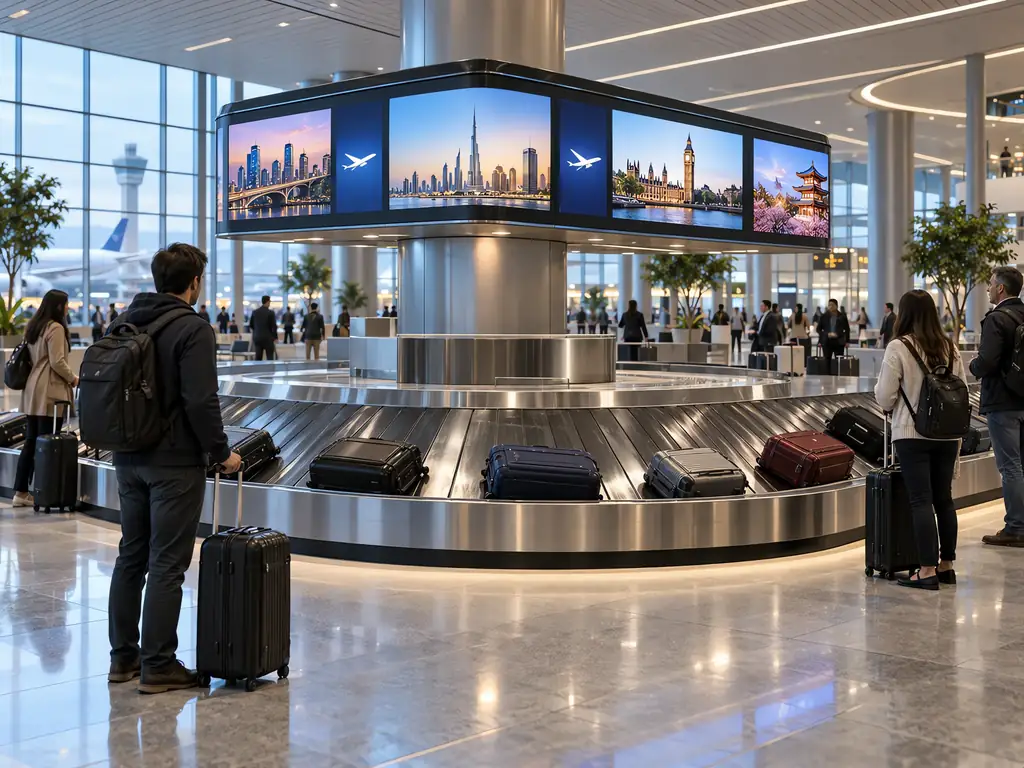
- Baggage reclaim: 8 carousel band signs with backlit flight/city identifiers, integrated with BHS for real-time carousel assignment updates
- Retail & services directories: 25 double-sided illuminated totems with interactive wayfinding maps, multi-language support (EN, ZH, JA, KO, AR), and retail promotional CMS
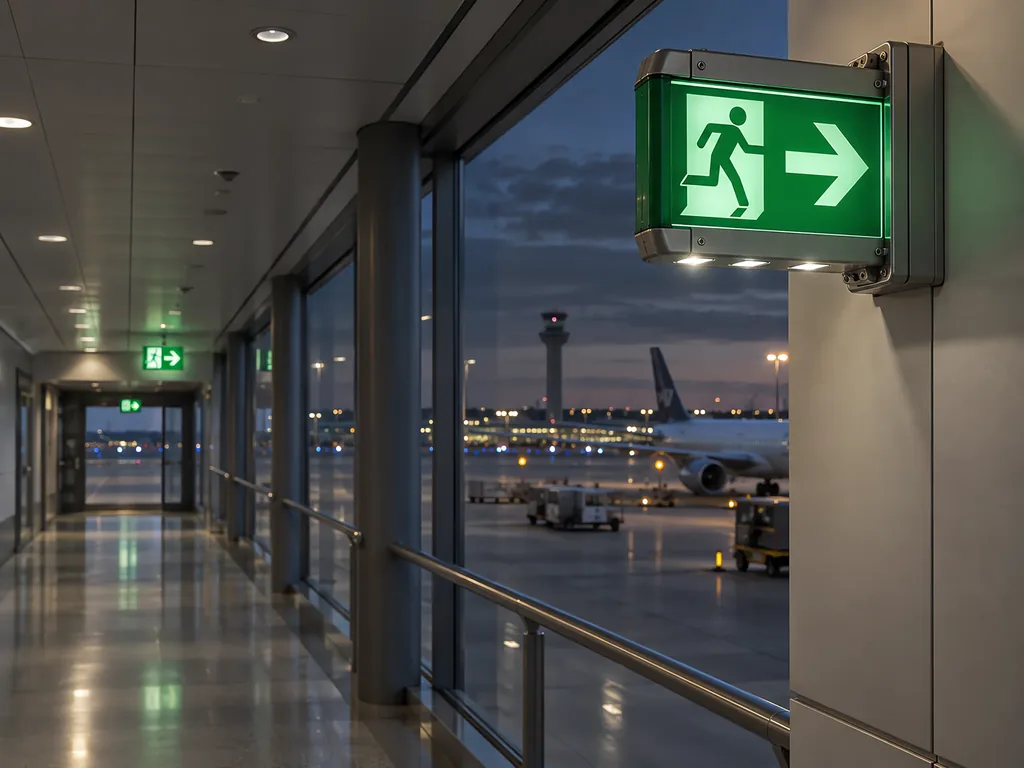
- Emergency egress: 300+ photoluminescent/LED hybrid exit signs per AS 2293 / ICAO Annex 14, with 3-hour battery backup and automatic self-test logging
- Airside vehicle wayfinding: 60 illuminated directional signs for GSE routing, stand allocation, and low-visibility operations (LVO) procedures
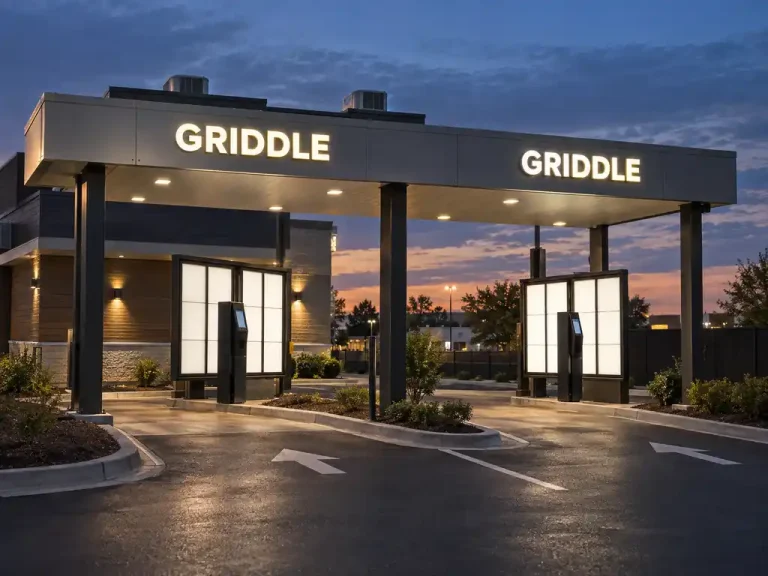
- Exterior terminal identity: 15m illuminated roof-mounted logo and terminal name — visible from approach path and airside, wind rated Region D Terrain Category 2
Technical Specifications
- All airside signs: frangible mounting per ICAO Annex 14, non-conductive materials in lightning protection zones
- Gate markers: POE-powered RGB LED rings, BACnet/IP integration with AODB, fail-safe “boarding” state on comms loss
- Emergency signs: AS 2293.2 compliant, DALI-addressable self-test, central BMS monitoring
- Exterior roof sign: structural aluminum 7075-T6, marine-grade anodizing, 180 km/h wind survival, aircraft warning lights per CASA
- Materials: marine-grade 5083 aluminum, 316L stainless fixings, UV-stable polycarbonate, powder coat (Qualicoat Class 2)
Result
CASA Part 139 aerodrome certification granted with zero signage findings. Passenger wayfinding satisfaction (quarterly ASQ survey) improved from 3.7 to 4.5/5.0. Dynamic gate markers reduced “wrong gate” incidents by 52%. The retail directory CMS enabled 34% increase in concession revenue attribution via wayfinding touchpoints. The exterior roof sign achieved 100% approach-path visibility compliance in CAA photometric survey. The unified specification across 435+ signs allows the airport’s asset management team to maintain a single BOM for all replacements — critical for a 24/7 facility where signage failure triggers operational restrictions.