A Canadian third-party logistics operator consolidated three leased warehouses into one purpose-built distribution campus in Ontario: four buildings, 96 dock doors, a guardhouse, and a single access road shared with employee and heavy-vehicle traffic. The buildings are deliberately identical — which is efficient to build and disastrous to navigate.
The problem with identical buildings
When every elevation is the same panel colour and the same roof line, drivers default to counting docks instead of reading them. That produces two failures: trucks arriving at the wrong dock and blocking the yard while they turn around, and new agency staff losing ten to fifteen minutes per shift finding the right door. Neither shows up in a facilities budget, and both cost real money per week.
What we built
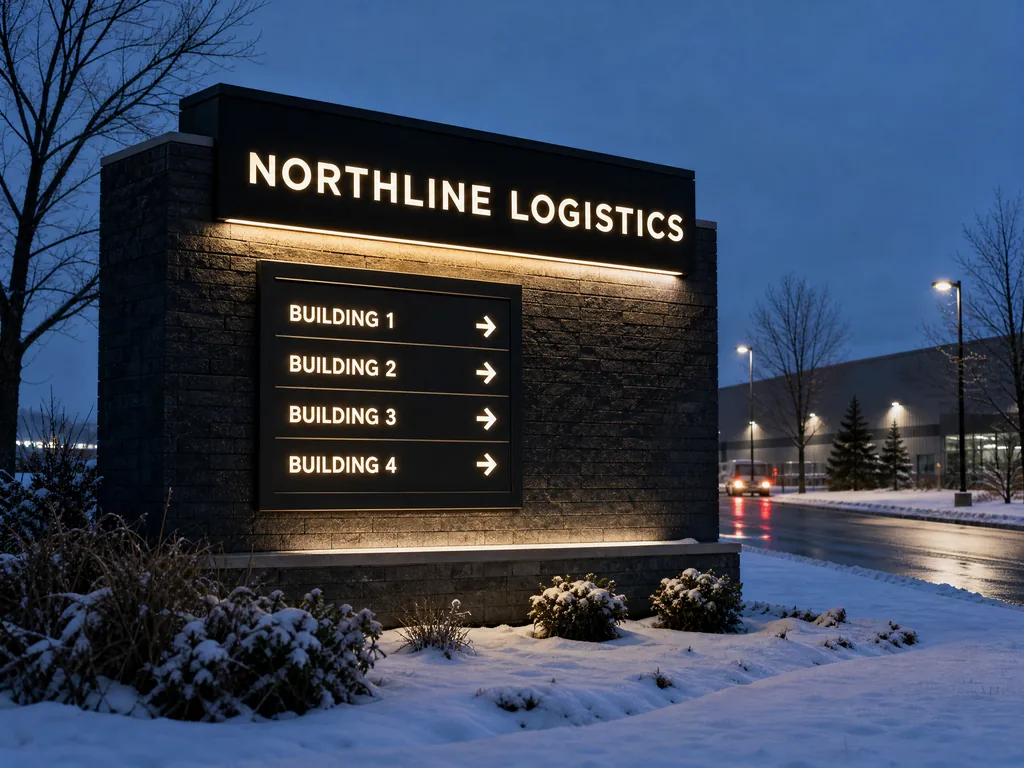
Access-road monument. A single illuminated monument at the campus entrance carries the operator identity and a live directory of the four buildings with directional arrows. This is the one element on the campus that is lit — it needs to work at 4am in winter, and drivers need to read it before committing to the internal road.
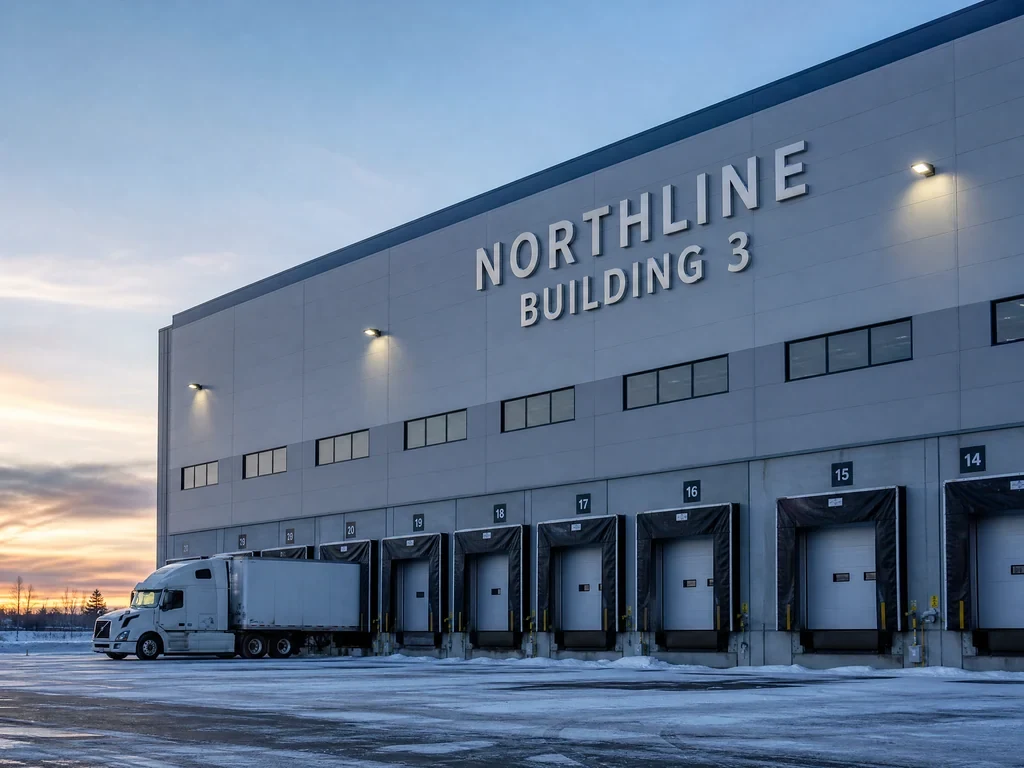
Building identification. Large non-illuminated stainless letters and a bold building number on each elevation, sized and positioned so the number is legible from the yard approach rather than only from the front car park. The numbers were placed on the elevation that a truck actually sees, which is not always the elevation architects draw for.
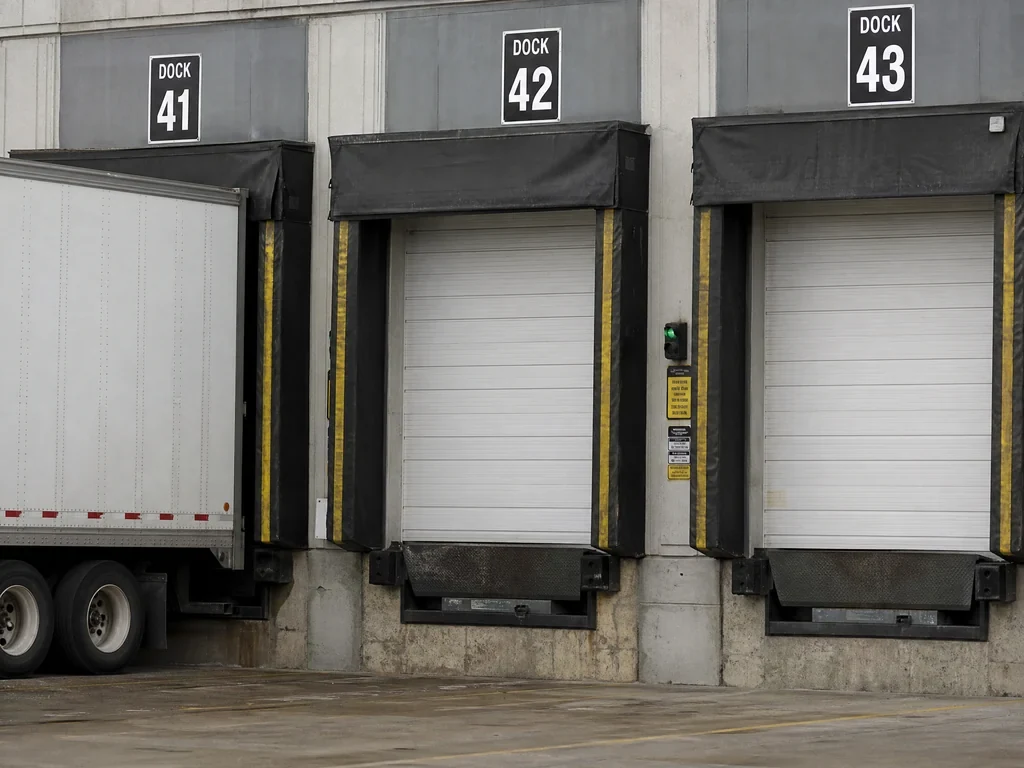
Dock numbering. High-contrast, retro-reflective dock plates at every one of the 96 doors, numbered in a strict sequence with building prefix. Retroflective rather than illuminated: dock areas are floodlit anyway, and retroreflective plates survive washdown and impact far better than lit units.
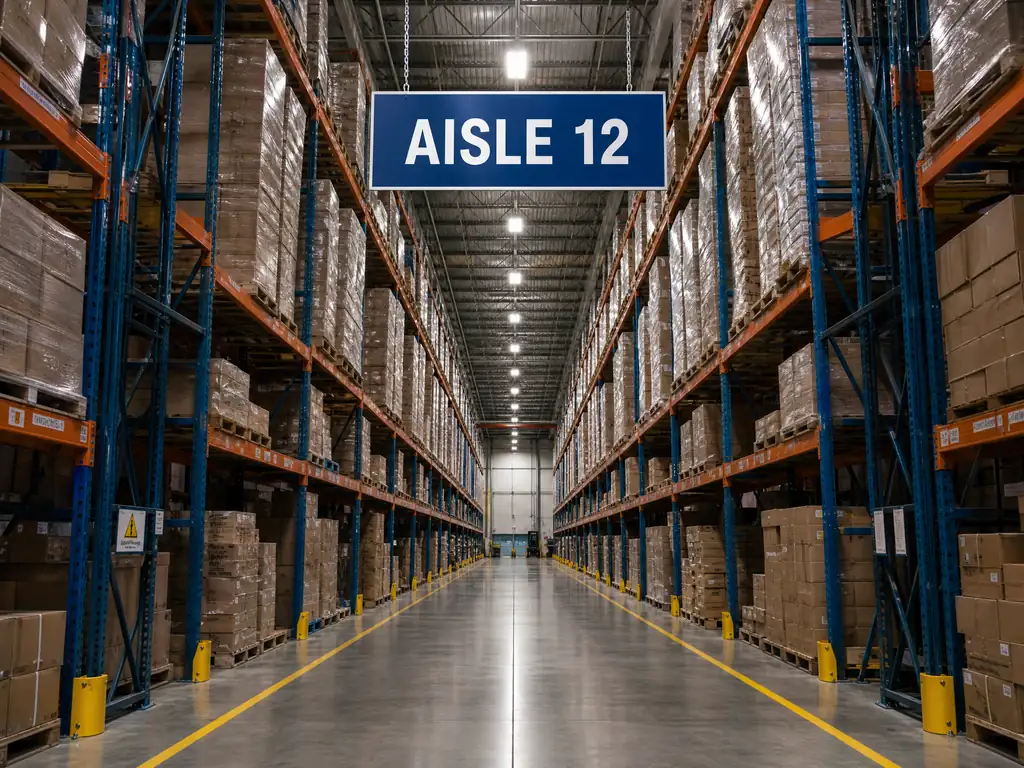
Truck routing and interior wayfinding. Directional signage at each internal junction, a guardhouse checkpoint with height and weight restriction plates, and interior rack-aisle identification with suspended aisle markers.
Why non-illuminated was the right answer
A logistics campus is a cost centre, not a brand statement. Illuminating four building elevations would have added capital cost, electrical infrastructure, and an ongoing maintenance liability for zero operational benefit — the yard is already lit at night for safety. We put the lighting budget into the one place it changes behaviour: the entrance monument where a driver makes a routing decision.
Result
Driver dock misdirection dropped to near zero in the first month, removing the yard congestion caused by trucks turning around at the wrong building. Agency staff onboarding time fell because building and aisle identification no longer relies on tribal knowledge. The operator has since issued the same specification to two additional facilities.