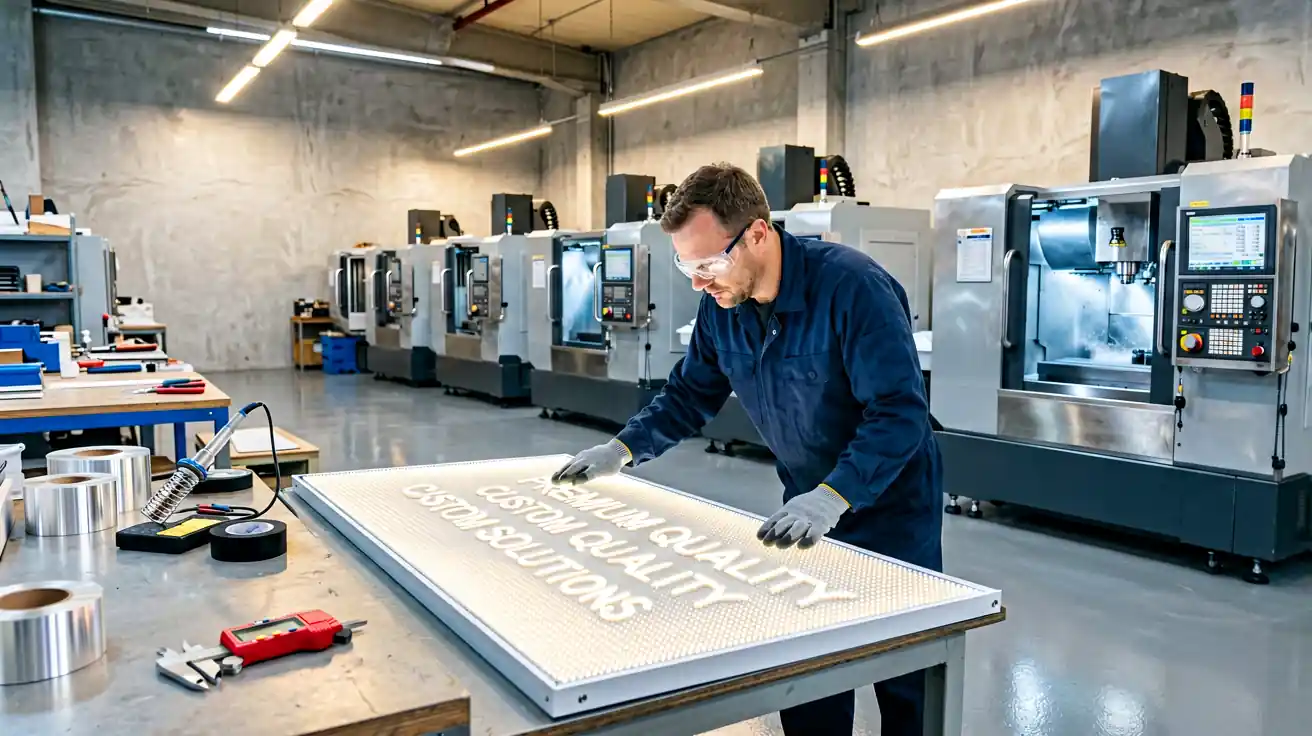
“Found a China signage factory but nervous about quality. Can someone explain the manufacturing process?” — r/manufacturing
It’s completely understandable to feel uncertain about ordering custom signs from a factory you’ve never visited. But understanding the manufacturing process — from design to delivery — demystifies the experience and helps you make informed decisions. Here’s exactly how custom LED signage is manufactured.
Overview: The Custom Sign Manufacturing Process
| Phase | Duration | Key Activities |
|---|---|---|
| 1. Design & Engineering | 3-5 days | Vector artwork, structural CAD, material selection |
| 2. Material Procurement | 3-7 days | Aluminum, acrylic, stainless steel, LED modules, power supplies |
| 3. Fabrication | 7-14 days | CNC cutting, welding, bending, painting, assembly |
| 4. LED Installation | 2-3 days | LED strip routing, soldering, connection to driver |
| 5. Quality Control | 1-2 days | Light uniformity test, 24-hour burn-in, structural check |
| 6. Packaging & Shipping | 2-3 days | Foam-wrapped, plywood crating, label, load for freight |
Whether you need Custom Shaped Neon Lights or precision Edge-Lit Acrylic Letter Signs, each starts here. Phase 1: Design and Engineering
The process starts with your design. You send vector files (AI, EPS, CDR, or PDF) of your logo or artwork. The factory’s engineering team creates detailed CAD drawings showing dimensions, material thickness, mounting points, and LED placement. A reputable custom sign manufacturer will confirm every detail with you before cutting any material — backlight color, material finish, font choice, and size.
This is the time to ask questions. How thick is the acrylic? What type of stainless steel (304 vs 316)? What IP rating for the LED power supply? Good factories provide clear answers and documented specifications.
Architectural Signage projects demand premium materials. Phase 2: Material Sourcing
Quality starts with materials. Reputable factories in Shenzhen and the Pearl River Delta source from established suppliers: ADA-certified acrylic sheets, 304-grade stainless steel, Cree or Epistar LED chips, and Mean Well or equivalent power supplies. A factory near Shenzhen typically has access to the best materials at competitive prices — one reason why businesses worldwide choose Chinese signage manufacturers.
Phase 3: Fabrication
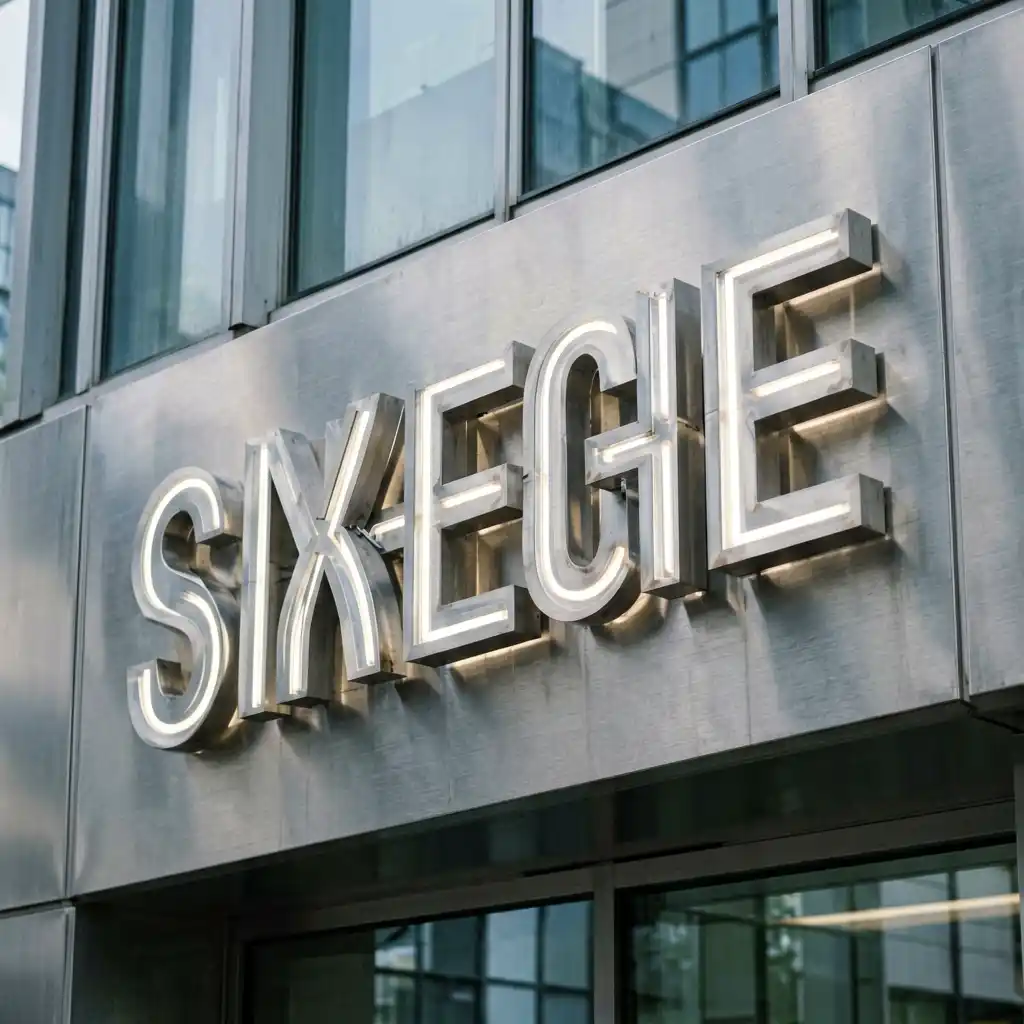
This is where the sign physically takes shape. For channel letters, aluminum sheet is cut on a CNC router, bent on a channel bender to form the letter shape, and welded at seams. For acrylic signs, the material is laser-cut or CNC-routed with precision. Stainless steel letters are cut, welded, ground, and polished to a mirror or brushed finish.
Surface finishing follows: painting, powder coating, or anodizing in your specified color. Each letter is hand-finished to remove burrs and ensure smooth edges before moving to the LED installation phase.
Phase 4: LED Installation
LED modules are installed inside each letter or sign body. The key quality indicators here are uniform light distribution (no hot spots or dark areas), proper waterproofing for outdoor signs, correct wire gauge for the LED load, and secure connections that won’t vibrate loose during shipping. Each sign is tested at this stage.
Quality Control: What to Look For
- Light uniformity test — All letters should be evenly illuminated with no bright or dark spots
- 24-hour burn-in — Signs run continuously for 24 hours to catch early LED failures
- Weather seal check — Outdoor signs tested for water ingress prevention
- Voltage stability — Consistent brightness across all connected letters
- Visual inspection — No scratches, smudges, paint defects, or alignment issues
Phase 5: Packaging and Shipping
Proper packaging is critical for international shipping. Each sign should be individually wrapped in foam or bubble wrap, then packed in a plywood crate with internal bracing to prevent movement during transit. Crating adds to shipping cost but drastically reduces damage risk. Reputable factories include crating in their quoted price.
Red Flags When Choosing a Sign Manufacturer
- No physical sample offered before production
- Can’t provide material certifications (LED chip source, steel grade)
- No QC documentation or 24-hour burn-in test
- Vague shipping and warranty terms
- Refuses video calls to show production progress
Action Checklist
- ☐ Request a detailed manufacturing timeline for your sign type
- ☐ Ask about material sourcing — steel grade, LED chip type, acrylic thickness
- ☐ Require a physical sample before production runs
- ☐ Request QC documentation (burn-in test, light uniformity photos)
- ☐ Clarify warranty terms and after-sales support
- ☐ Get packaging and shipping details in writing
- ☐ See our signage projects portfolio for real examples
Ready to start your custom sign project? Contact our team for a detailed manufacturing timeline and quote. We’re happy to walk you through every step of the process.