“We’re renovating our office building and need a wayfinding system. What’s the standard approach?” — r/commercialrealestate
Wayfinding signage is one of those things you only notice when it’s bad. A confusing lobby, unlabeled corridors, and hidden stairwells — our Wayfinding Systems solve this frustrate visitors, waste time, and create a poor first impression. A well-designed wayfinding signage system solves all of this — guiding people intuitively from the parking lot to their destination without a single question.
Wayfinding Systems: What Is a Wayfinding Signage System?
A wayfinding signage system is a coordinated set of signs that helps people navigate a physical space. It includes everything from the monument sign at the street entrance to the room number plaque on the office door. The goal is to create a seamless navigation experience using consistent design, strategic placement, and clear information hierarchy.
The 5 Types of Wayfinding Signs
| Type | Purpose | Example Locations |
|---|---|---|
| Identification | Tell people where they are | Building name, floor numbers, room labels |
| Directional | Guide people to destinations | Arrow signs at intersections, corridor signs |
| Informational | Provide context and orientation | Building directory, floor plan maps |
| Regulatory | Communicate rules and safety | No smoking, fire exit, accessible routes |
| Destination | Mark the final point | Office entrance signs, department labels |
Key Principles of Effective Wayfinding Design
1. Start with the Building Entry
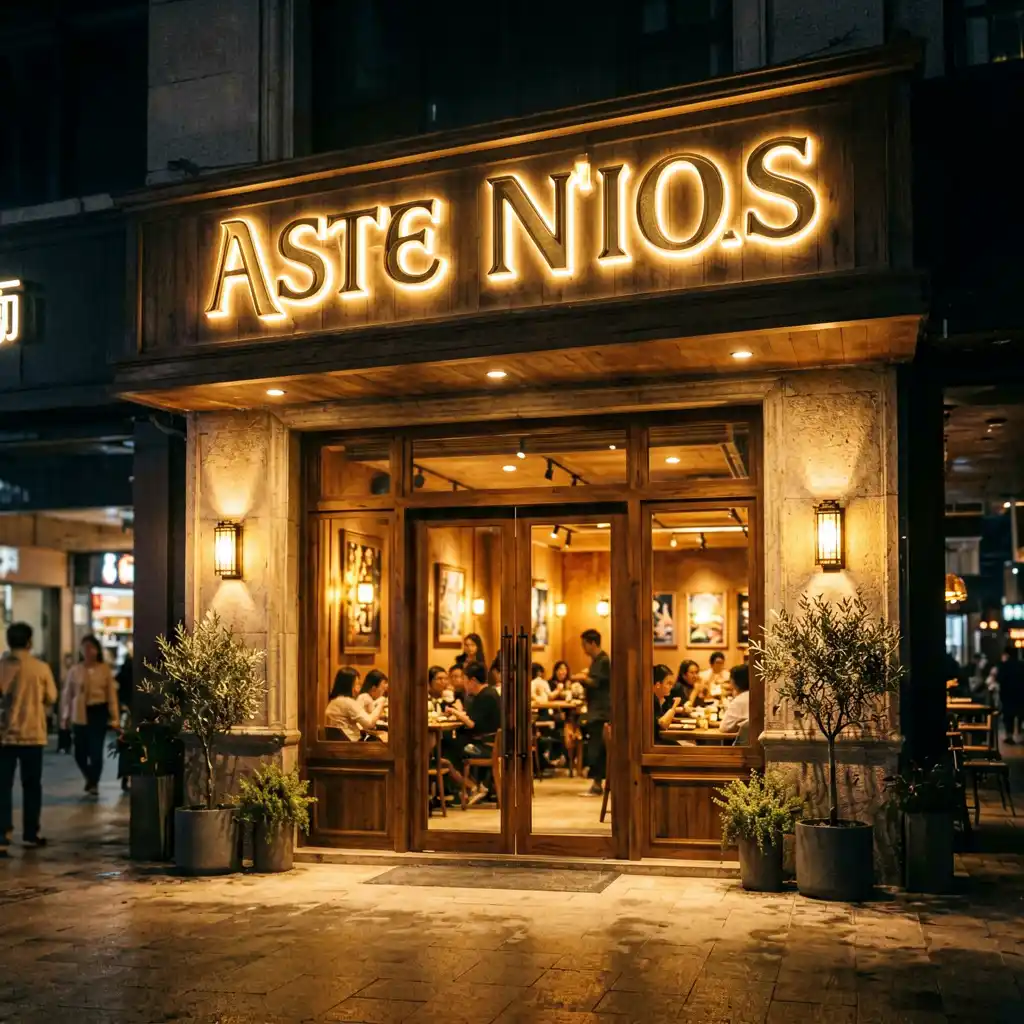
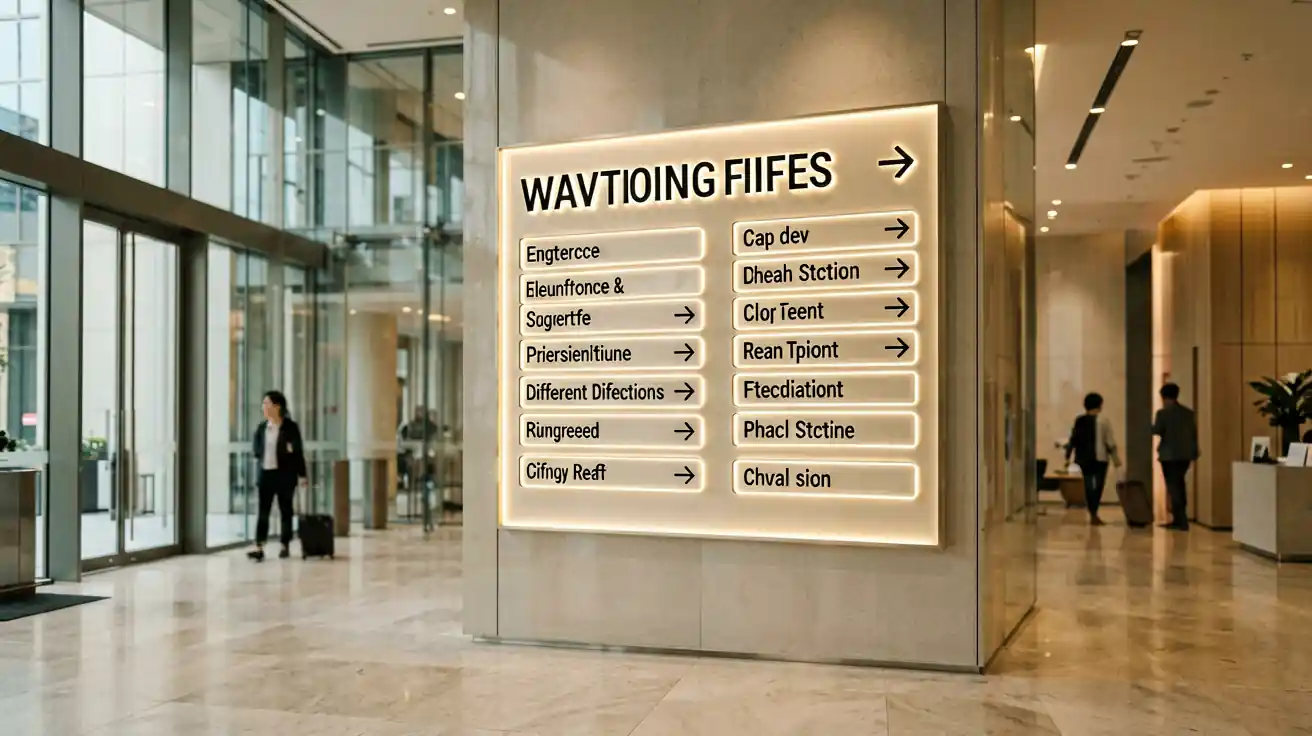
The journey begins before the visitor even enters. A clear monument or pylon sign at the driveway tells them they’ve arrived at the right place. A lobby directory sign immediately orients them. From there, every decision point — elevator banks, corridor intersections, stairwells — needs a directional sign.
2. Use Consistent Visual Language
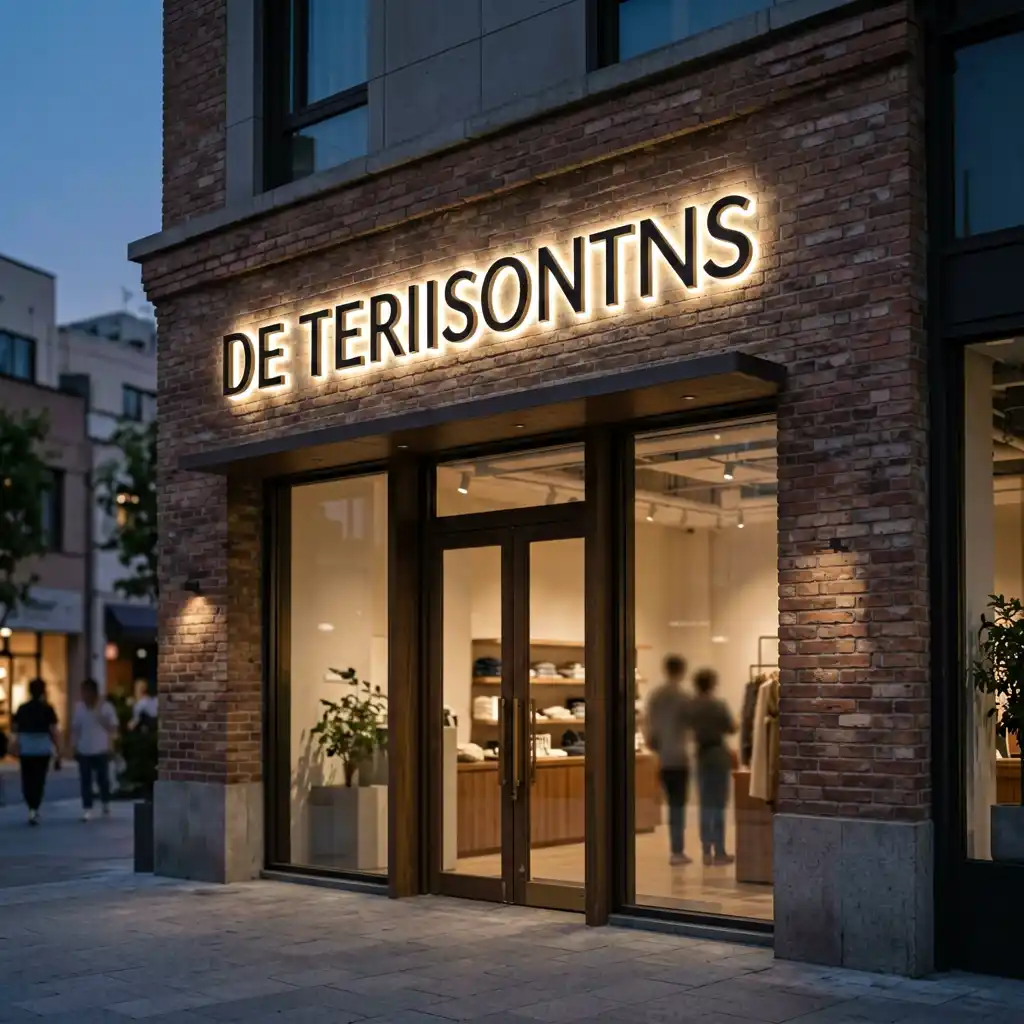
All wayfinding signs should share the same typography, color system, iconography, and material finish. In a corporate office, this often means brushed metal or acrylic with precision-cut lettering illuminated by indoor LED signage. Consistency across the system with Ultra-Thin Light Boxes and Frosted Acrylic Signs builds familiarity — once a visitor understands your sign language, they can navigate without reading every word.
3. Plan the Information Hierarchy
Not all information is equally important. A lobby directory should show all tenants at a glance. Corridor signs should list only what’s down that hallway. Room-level signs show who or what is inside. This layered approach prevents information overload and makes each sign faster to read.
Common Wayfinding Signage Mistakes
- Too many signs — Visual clutter confuses more than it helps. Every sign should answer a question someone will actually ask.
- Inconsistent placement — Signs at different heights or offsets break the navigation rhythm. Standardize mounting height across all signs.
- Poor contrast — Illuminated or not, wayfinding signs need sufficient contrast between text and background. This is critical for accessibility.
- No backup power for illuminated signs — If your directory sign is backlit and the power goes out, visitors are stranded. Consider battery-backed LED systems.
- Missing multi-language support — In international buildings, wayfinding systems should include English plus the local language. English-only confuses local visitors; local-only confuses international ones.
Indoor LED Signage for Wayfinding
Modern wayfinding systems increasingly use indoor LED signage for dynamic directory displays. Digital directories can update tenant listings instantly, show interactive floor plans, and even integrate with building management systems. For static directional signs, edge-lit acrylic signs offer a clean, professional look with energy-efficient LED illumination that lasts 50,000+ hours.
Action Checklist for Your Wayfinding Signage Project
- ☐ Map the visitor journey from street to destination
- ☐ Identify all decision points where people choose a direction
- ☐ Decide on the sign types needed (monument, directory, directional, room signs)
- ☐ Choose a consistent material and finish system (brushed metal, acrylic, or both)
- ☐ Determine illumination requirements (indoor only, or illuminated directories)
- ☐ Design the visual system — typography, arrows, icons, colors
- ☐ Create a sign location map showing every sign position
- ☐ Architectural Signage often integrates with wayfinding. Work with a manufacturer experienced in commercial signage systems
Need professional wayfinding signage for your building? Get in touch with our team. We design and manufacture complete signage systems for corporate offices, hospitals, hotels, and mixed-use developments.