If you’ve ever searched r/smallbusiness or r/restaurantowners for signage advice, you’ve probably seen the same debate play out dozens of times: “Should I get LED neon or real glass neon for my business sign?” The answers are always split — half swear by the nostalgic glow of genuine glass, the other half praises LED neon’s practicality and lower cost.
The truth is, both have their place. But choosing wrong can cost you thousands in replacements within a year or two.
This guide breaks down LED neon vs glass neon across 9 key factors — brightness, durability, cost, energy, safety, lifespan, customization, outdoor suitability, and maintenance — so you can make the right call for your business.
What Is LED Neon Flex?
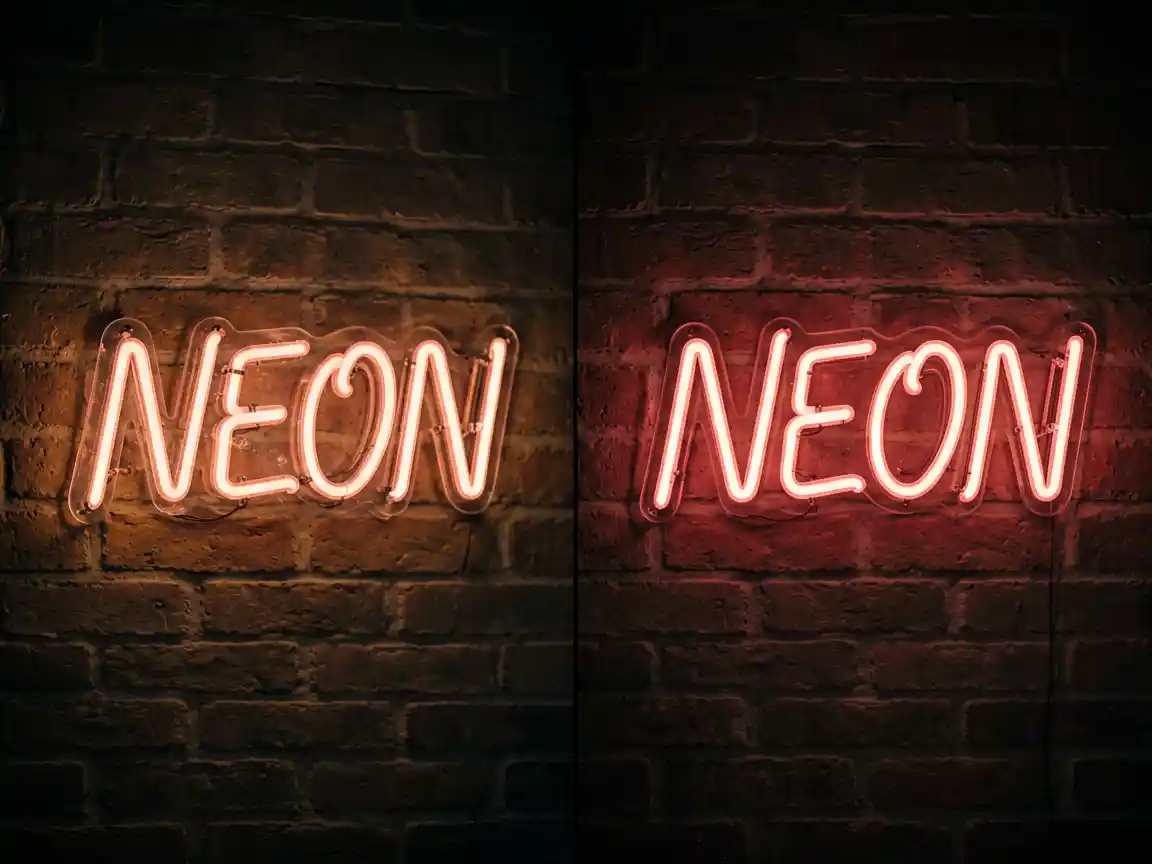
LED neon flex — also called LED neon rope or flexible neon — uses PVC or silicone tubing with embedded LED strips. It mimics the look of traditional glass neon but is flexible, shatterproof, and runs on low-voltage DC power (12V or 24V).
At Y SIGNS, our LED Neon Flex Signs use high-brightness SMD LEDs encased in UV-stabilized silicone, rated for both indoor and outdoor use.
What Is Glass Neon?
Traditional glass neon signs are handmade by artisans who bend hollow glass tubes into shapes, then fill them with noble gases (neon gas for red-orange, argon + mercury for other colors). When high-voltage electricity (thousands of volts) passes through, the gas ionizes and glows.
Glass neon has been around since the early 1900s and is prized for its warm, continuous glow and vintage aesthetic.
LED Neon vs Glass Neon: 9-Point Comparison
| Factor | LED Neon Flex | Glass Neon |
|---|---|---|
| Brightness | Very bright, adjustable, daylight-visible indoors | Warm glow, dimmer — hard to see in direct sunlight |
| Energy Consumption | 12-24W per meter (low voltage) | 60-150W per meter (high voltage transformer needed) |
| Lifespan | 30,000-50,000 hours (~5-8 years continuous) | 8,000-15,000 hours (~1-3 years, degrades faster with vibration) |
| Durability | Shatterproof, flexible, weatherproof (IP65-IP68) | Fragile glass — breaks easily during shipping or installation |
| Safety | Low voltage (12/24V), no heat, safe to touch | High voltage (2,000-15,000V), gets hot, fire risk |
| Color Options | 16 million colors (RGB/W), dynamic effects, color-changing | Limited to gas color palette (~12 colors), no dynamic effects |
| Outdoor Suitability | Excellent — IP65+ rated, UV-resistant, -20°C to 60°C | Poor — weather-sensitive, needs protective housing |
| Custom Shapes | Any 2D/3D shape, flexible, tight bend radius (2-4cm) | Hand-bent glass, limited to gradual curves (5-10cm radius) |
| Cost (installed) | $80-200 per running meter | $150-400+ per running meter |
Which One Should You Choose?
Choose LED Neon Flex If:
- Your sign goes outdoors or in a window facing direct sunlight
- You want color-changing effects (RGB, animations, scrolling text)
- You need to ship the sign (LED flex can be rolled and packaged flat)
- Your business is in a high-traffic area where broken glass is a liability
- You’re on a moderate budget and want the best value
- You want energy-efficient signage that runs 24/7 cheaply
Choose Glass Neon If:
- You value an authentic vintage aesthetic (restaurants, bars, retro-themed venues)
- The sign will be displayed indoors only, in a protected location
- Artisanal craftsmanship matters to your brand story
- Budget is less of a concern
- The sign is a permanent installation in a controlled environment
Real-World Failure Statistics
From our 15 years of experience manufacturing signage, here are telling failure rate data points:
| Issue | LED Neon Flex | Glass Neon |
|---|---|---|
| Breakage during transit | <1% | 8-12% |
| Failure within first year | <2% | 5-8% |
| Outdoor water damage | <3% (if properly sealed) | 15-25% (condensation in tubes) |
| Color degradation over 3 years | <5% (UV-stabilized silicone) | Minimal (gas doesn’t fade) |
Frequently Asked Questions
Can LED neon look as good as glass neon?
Modern LED neon flex with silicone diffuser tubing produces a 95% similar look to glass neon. The main visual difference is that LED has tiny “dark spots” between LEDs (visible up close), while glass neon has a perfectly continuous glow. At viewing distance (>1m), the difference is nearly imperceptible.
How long does each type last outdoors?
LED neon flex with UV-stabilized silicone and proper IP65+ sealing lasts 5-8 years outdoors. Glass neon outdoors typically lasts 1-3 years before weather damage affects performance, unless housed in a weatherproof enclosure.
Is glass neon banned anywhere?
Some cities have restrictions on glass neon due to high-voltage fire codes, mercury content (in argon/mercury tubes), and disposal regulations. LED neon flex complies with all current safety and environmental regulations globally.
Ready to Choose Your Sign?
Whether you decide on LED neon flex or traditional glass neon, the right choice depends on your specific business needs, location, and budget. Contact Y SIGNS for a free consultation — we’ll help you select the perfect signage solution for your brand.
Browse our neon sign collection or read more about how neon signs attract customers.